 Britannia Auctions
Complete site dispersal auctions in Liverpool
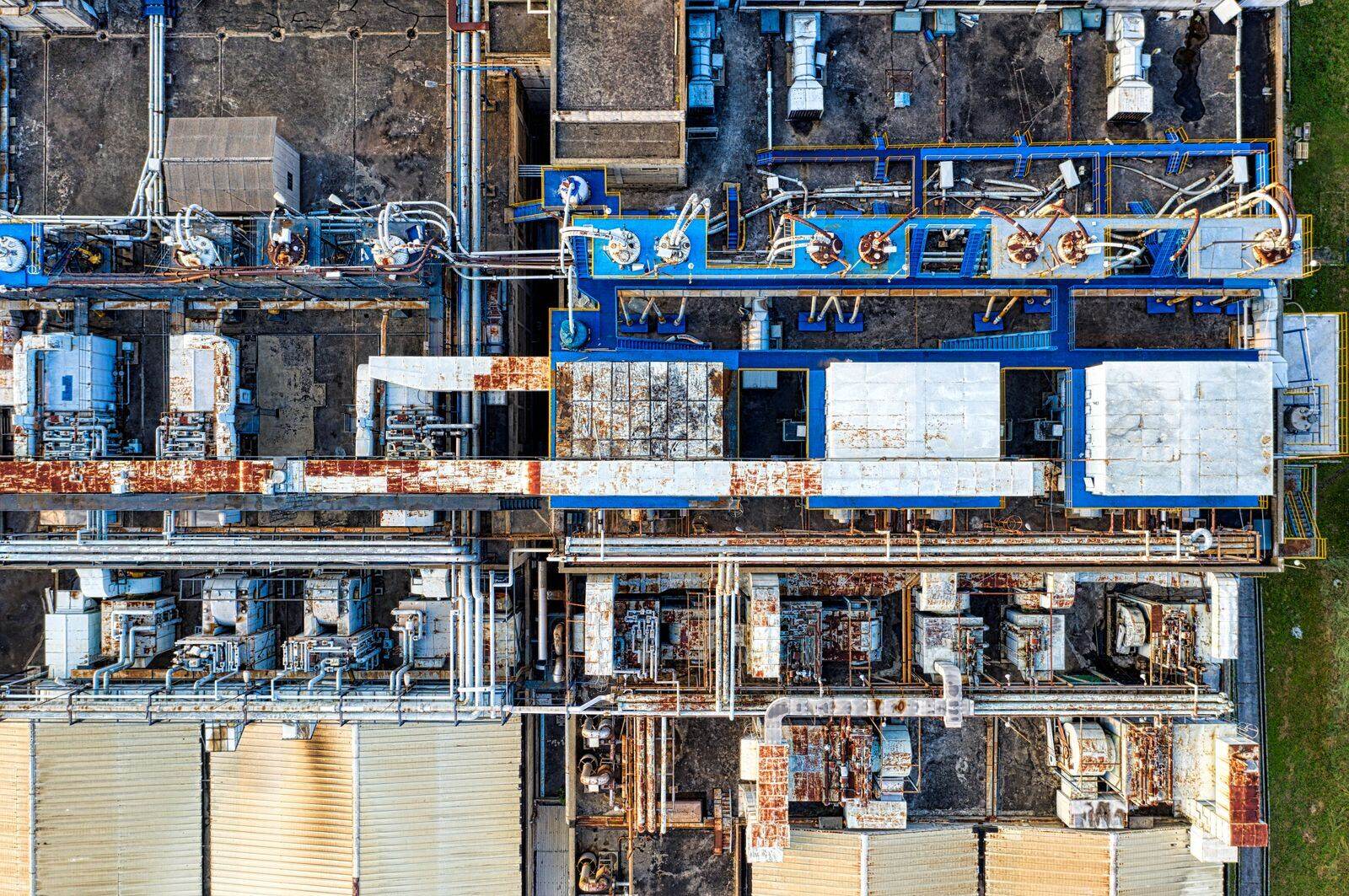
Liverpool's economy runs on freight, and so do many of the site dispersals we are asked about. A haulage or freight forwarding depot in Bootle or Kirkby that has closed, with a yard full of trailers, a workshop with lifts and tyre equipment, a warehouse racked to the roof and an office with the IT still on the desks. Or a food plant, a pharmaceutical unit in Speke or an automotive supplier in Halewood, where the process plant is fixed and the building has to be handed back clean.
We sell the whole site in one online timed auction. Vehicles and trailers, workshop equipment, racking, forklifts, plant and office contents all go in one catalogue, with the viewing on one day and collection in an agreed window after the close.
The access varies from the dockside to the outer estates, and we measure it at the first visit rather than assume it.
Depots and warehouses have their value in the yard
On a freight depot the big money is usually outside the building. Tractor units, trailers, curtain siders, box vans and the shunter need no lifting, which keeps their removal simple, and the haulage trade across the north west is close enough to attend a viewing day. Inside, the workshop has vehicle lifts, tyre changers, compressors and diagnostic kit that suit garages and other operators. The warehouse holds pallet racking, forklifts, pallet trucks and dock equipment.
We lot the vehicles individually with the registration, mileage, MOT status and any known faults. A vehicle on finance belongs to the funder until it is settled and can only be sold with their agreement, so we ask for the paperwork on day one. Trailers are checked for ownership plates, because a rented trailer standing in the yard is easy to miss.
Racking is lotted by the run for buyers who strip it themselves, and their slot is usually agreed for after the vehicles and forklifts have gone so the floor is clear.
Getting plant out past the docks
Knowsley, Speke and the parks along the M57 and M62 sit close to their junctions, and the older dockside roads at Seaforth and Bootle are narrower and busier with port traffic, but neither tells us what a particular unit takes. At the first visit we record vehicle access and turning space, the loading facilities, the door dimensions and the floor levels, and where a low loader cannot reach the door we say so in the catalogue so the buyer's rigger can plan a lift to a smaller vehicle.
Pharmaceutical and food sites bring clean room fittings, stainless steel process vessels, packing lines and cold rooms, and much of it leaves by van or tail lift lorry rather than crane. Automotive sites bring presses, robots, machining plant and test equipment that need a rigger.
The trade in Bootle, Kirkby, Huyton, St Helens, Warrington, Widnes and Runcorn is close enough to attend a viewing day, with the Wirral a tunnel away. Online bidding opens the sale to the whole of the UK.
What these sales can include
- Complete production lines
- CNC lathes and machining centres
- Presses, guillotines and folders
- Overhead cranes and hoists
- Compressors and air receivers
- Forklift trucks
- Racking and storage systems
- Tooling, spares and consumables
- Inspection and test equipment
- Welding and fabrication equipment
- Office furniture and IT equipment
- Canteen and welfare equipment
- Vehicles and trailers
The auction
The sale runs as an online timed auction, open for bidding for a fixed period with a viewing day at the site before the close. Lots close in sequence, and a late bid extends the closing time for that lot so nobody is beaten by the clock. Bidders register online, and the sale is advertised to the trade for that type of equipment.
Lots are offered as seen under the auction terms, and buyers are expected to inspect before bidding. The buyer pays the hammer price plus a buyer's premium, with VAT charged where it applies and shown separately on the invoice. Once paid, the buyer collects within the agreed window. Our staff are on site throughout collection to check off each lot and control access.
For very large sites the sale may be split into two or more auctions, so the building empties in stages and production can continue in one area while another is cleared.
The complete site dispersal auctions page covers what a site dispersal involves, preparing the site, removal and heavy lifting, timescales and what to expect.
Questions about selling in Liverpool
- Some of our trailers are hired and some vehicles are on hire purchase. How do you handle that?
We separate them at the start. Hired trailers and vehicles go back to their owners and are not listed. A vehicle on hire purchase or finance is the funder's until the agreement is settled, so it can only be sold with their written agreement, which we obtain before the auction. Where they agree, the settlement is usually paid from the proceeds and the balance comes to you. It is worth doing this on the first day, because consent can take time and we do not want it holding up the close.
- The warehouse is on a dock estate road that lorries struggle with. Will that hurt the sale?
It will not stop it. Most of what a warehouse holds is sized for a van or a rigid lorry, and the access goes in the catalogue so buyers price the removal before they bid. Racking crews use their own vehicles and work in slots. Where a lot is heavy enough to need a low loader, we note the access in the catalogue and the buyer plans accordingly. On a tight road the answer is usually booked slots and someone on the gate, agreed with you before the window opens.
More questions about site dispersals
Related services
Guides
- Auction or private treaty: which route to choose
Auction gives you a fixed date and an open market. Private treaty gives you a negotiated price and privacy. This guide sets out when each route suits, what you give up with each, and why many sales use both.
- Closing a business: a timeline for selling the assets
Work backwards from the day you hand the site over. This guide covers lease end and dilapidations, when to instruct, when staff should leave, when to keep the power on, and how to leave enough room for collection and making good.
- What insolvency practitioners need from an auctioneer
For office holders realising physical assets. Covers the instruction letter, the asset schedule and valuation basis, retention of title, finance checks, site security, health and safety during the sale, and the reconciliation you need for the file.