 Britannia Auctions
Sell forklifts, racking and handling equipment
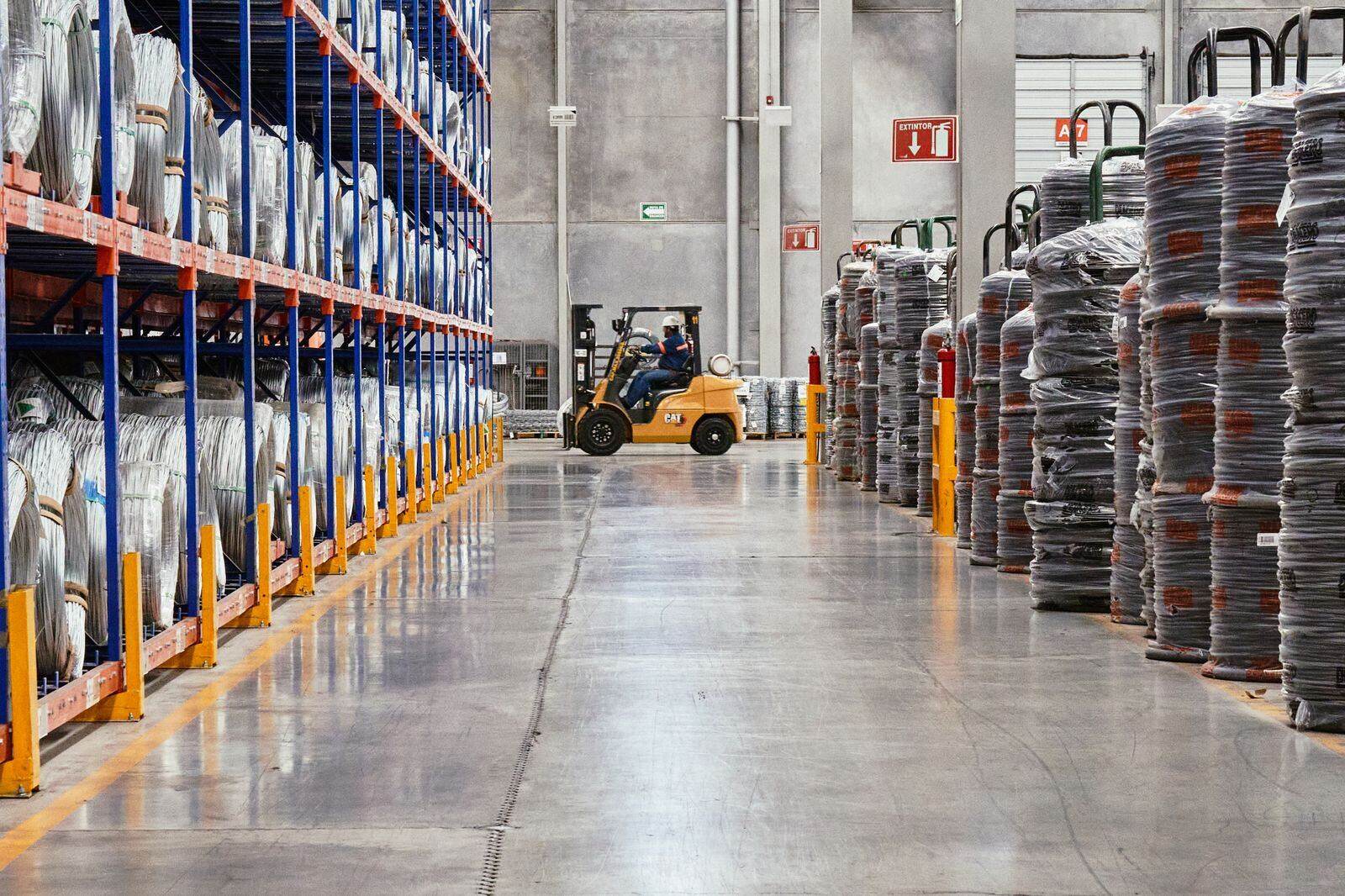
A warehouse move, a contract loss or a change in how you store goods can leave you with equipment you no longer need. Forklifts, racking and conveyors take up floor space and lose value while you decide what to do with them.
We sell warehouse and logistics equipment by online timed auction, either from your site or from our premises. Bidding is online and open to warehouse operators, dealers and fit out contractors across the UK. Use the contact form to tell us what you have and when the site needs to be clear.
What these sales can include
- Counterbalance forklifts
- Reach trucks
- Powered pallet trucks
- Hand pallet trucks
- Pallet racking
- Mezzanine floors
- Longspan and cantilever shelving
- Conveyors and sortation
- Roll cages and stillages
- Stretch wrap machines
- Pallet scales
- Battery chargers
- Order pickers and stackers
- Dock levellers and loading equipment
Racking and how it comes down
Pallet racking is often one of the larger items by value in a warehouse, and there is a used market for it. Buyers want to know the manufacturer, the frame heights, the beam lengths and load ratings, and how many bays there are. A racking survey or the original installation drawing gives them this in one go.
Dismantling is the main question. Racking can be sold in situ for the buyer to dismantle, or taken down and stacked before the sale. Selling in situ saves you the cost but means the buyer has to have the labour and the time. Where the site must be handed back on a fixed date, racking that is already down and stacked is simpler to collect and easier for a buyer to price.
Mezzanine floors follow the same logic, with the added issue of building control and fire protection on removal.
Forklifts and the records that matter
Forklifts, reach trucks and other lifting equipment must be thoroughly examined at set intervals under LOLER. Buyers ask for the latest report of thorough examination and the hour meter reading, so have both to hand before the truck is catalogued. Gather the service history, the operator manuals and the keys.
For electric trucks, battery condition sets much of the value. Note the battery age, whether the charger is included and whether it is single or three phase. A truck with a tired battery can still be catalogued, provided the description says so.
Gas trucks should be sold with empty cylinders removed. Diesel trucks should be run before the photographs are taken so buyers can see them working.
The small equipment adds up
Between the forklifts and the racking sits a large amount of equipment that is easy to overlook. Sold together in lots, it is worth including rather than leaving behind:
- hand pallet trucks and powered pallet trucks
- roll cages, stillages and pallet boxes
- conveyors, sortation and packing benches
- stretch wrap machines and strapping tools
- pallet scales and platform scales
- sack trucks, trolleys and steps
- warehouse label printers and scanners
- mobile safety steps and access platforms
We lot the small items in sensible groups so that a buyer can take a quantity in one lot rather than bid on single items. Consumables such as pallets, cartons and stretch film can also be lotted where there is enough to make a lot worth collecting.
How the sale runs
After a site visit we agree what is in the sale and what stays. We catalogue and photograph each lot, list the sale online and market it to warehouse operators, dealers and contractors. Bidders view on a set day, then bid online over the sale period, with lots closing in sequence.
Lots are offered as seen under the auction terms, with buyers expected to inspect before bidding. The buyer pays the hammer price plus a buyer's premium, with VAT charged where it applies and shown separately. We collect payment before release.
Collection runs over a window agreed with you. Buyers arrange and pay for the removal of their lots, with suitable handling equipment or specialist contractors where the item needs them. Our staff attend to release lots against paid invoices and see that dismantling is done safely.
Timing a sale around a site handover
As a guide, allow two to four weeks from instruction to final collection, depending on the number of lots, the dismantling involved and how quickly buyers collect. The date that matters is the one your landlord or the incoming occupier has set. Work backwards from that. Racking dismantling and mezzanine removal take longest, so those decisions come first.
If the site is still trading, we can sell in phases so that the equipment you still need is sold last. If the site is already empty, a single sale with a short collection window clears it fastest.
Tell us about any restrictions: loading bay hours, shared access, lift capacity or insurance requirements for contractors. These affect how we plan collection more than anything else.
Questions people ask
- Can racking be sold while it is still in use?
Yes. We can catalogue and photograph racking while it is loaded, and sell it for collection after you have emptied it. The buyer dismantles it during the collection window, or you have it dismantled and stacked beforehand. What we need is a firm date by which the racking will be empty and accessible, because that date is part of what a buyer is bidding on.
- What do buyers want to know about a forklift?
Make, model, capacity, lift height, mast type, fuel type and hours. They want the date of the last thorough examination under LOLER and whether the truck has any known faults. For electric trucks they want the battery age and whether a charger is included. Attachments such as side shift or fork positioners add value and should be listed. Photographs of the data plate and the hour meter answer most questions.
- Who removes the equipment after the sale?
The buyer arranges and pays for removal within the collection window. What each lot takes depends on its size and weight and the route out, so racking and conveyors are dismantled by the buyer or their contractor. We attend collection days, check payment before release and see that removal is done safely. You are not asked to dismantle or load anything, though someone will need to give access.
- What happens to equipment that does not sell?
That depends on the lot and on the reserve it carries. Where a lot does not reach its reserve we can offer it to the underbidder or to the next highest interest. Anything left after that can be relisted in a collective sale or cleared at your instruction. We agree the approach for unsold lots before the sale, not after.
- Is VAT charged on warehouse equipment at auction?
On each lot, VAT is charged where it applies and shown separately on the buyer's invoice, on the hammer price and on the premium. Whether it applies to the hammer price depends on your VAT position, so tell us at the outset and the lots are listed correctly. We issue the invoices to buyers and account to you for the VAT collected on your lots, which you then declare in the normal way.
Related services
Warehouse equipment by area
- Leicester
- Birmingham
- Manchester
- Sheffield
- Leeds
- Nottingham
- Derby
- Coventry
- Wolverhampton
- Stoke-on-Trent
- Liverpool
- Newcastle upon Tyne
- Sunderland
- Middlesbrough
- Hull
- Bradford
- Bristol
- Cardiff
- Swansea
- Glasgow
- Edinburgh
- Aberdeen
- London
- Reading
- Southampton
- Portsmouth
- Peterborough
- Northampton
- Milton Keynes
- Norwich
- Preston
- Warrington
- Doncaster
- Telford
- Plymouth
- Swindon