 Britannia Auctions
Clear the premises when the business closes
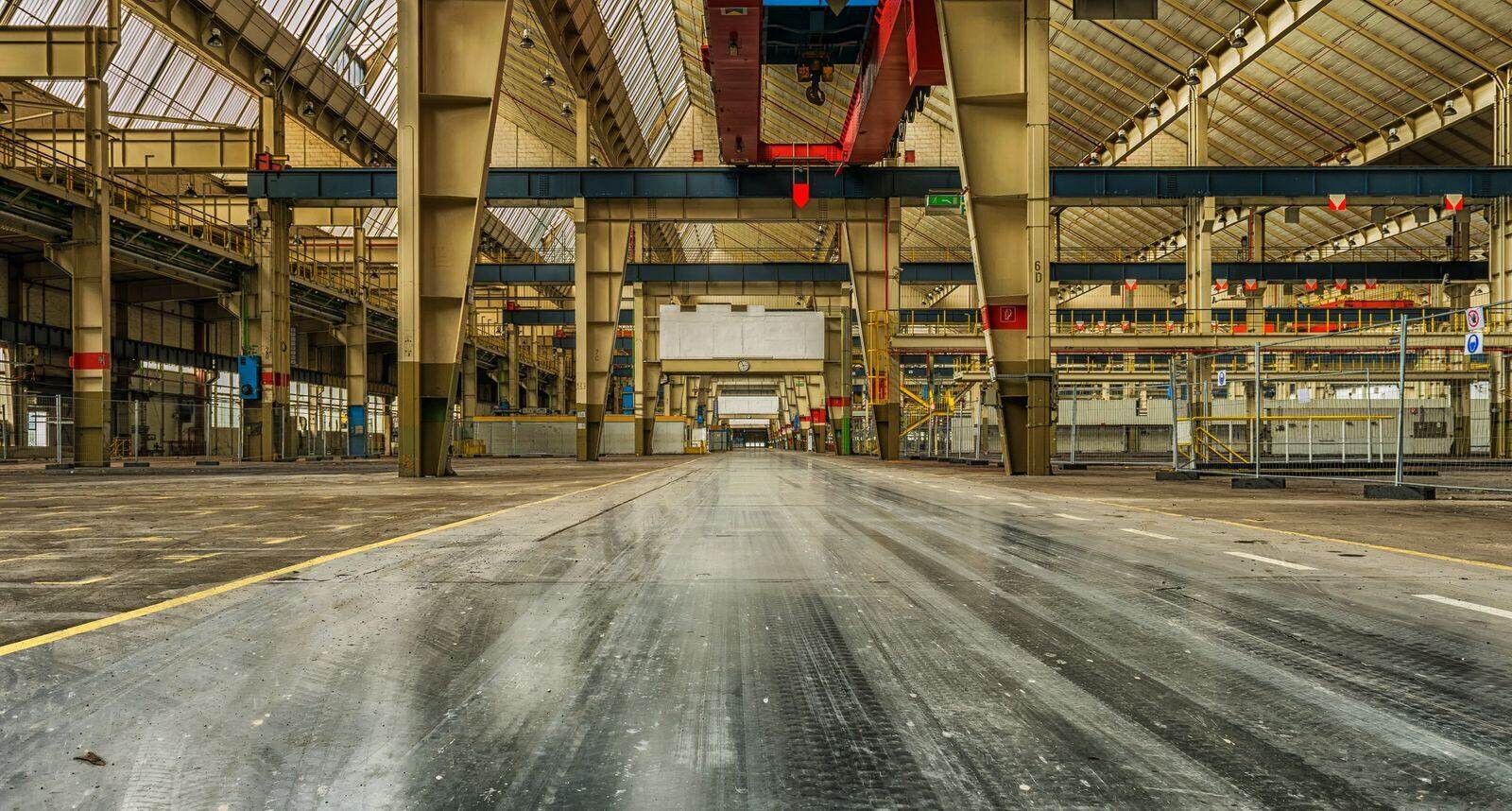
The business is closing. Perhaps the lease is up, the main contract has ended, or the numbers no longer work. Whatever the reason, you have a building full of equipment and stock, a landlord waiting for the keys, and a date that will not move.
An auction converts all of it to cash on a timetable and puts the removal in the hands of the buyers. We handle the cataloguing, the sale and the collection. Tell us what you have and when you need the premises empty through the contact form.
What these sales can include
- Production machinery
- Finished goods and raw materials
- Warehouse racking
- Forklifts and handling equipment
- Vans, trucks and trailers
- Office furniture and computers
- Workshop tools and benches
- Compressors and site services
- Catering equipment
- Retail fittings and display units
- Vehicle lifts
- Packaging machinery
Closure sales and the pressure of the date
Many closure sales are driven by the lease. Dilapidations terms often require the premises to be handed back empty, and overrunning can cost you, so check what your lease says. That makes the empty date the fixed point around which we plan the sale.
Working back from it, we need time to catalogue, time for the auction to run online, a viewing day and a collection window. As a guide, allow two to four weeks from instruction to an empty building for a mid sized workshop, depending on the number of lots, access and how quickly buyers collect. Larger factories need longer.
If your date is closer than that, say so at the first call. The timetable can be compressed, and where the date is very tight the contents can be offered as a single lot to a trade buyer.
Who needs to agree before you sell
A closure sale often involves people other than the owner. Check the following before we list anything:
- Assets on finance, hire purchase or lease belong to the funder until they are settled. They can only be sold with the funder's agreement, and where they agree the settlement figure is usually paid from the proceeds.
- If the company is insolvent or heading that way, take advice before anything is sold. An insolvency practitioner may need to instruct the sale. See our page on liquidation and insolvency asset sales.
- Landlord's fixtures stay. Items bolted to the building are sometimes the landlord's under the lease, and sometimes yours. Read the lease or ask.
- Customer property held on site, such as parts or goods in for repair, must go back to the customer, not into the sale.
We can work through this with you. It is much easier before the catalogue is published than after.
How we run the sale
We visit, agree the scope and catalogue the lots on site. Everything from the main machines down to the contents of the stores can be included. Small items are grouped into sensible lots so that nothing is left behind.
The sale runs online as a timed auction. Bidders register, view the lots on a set viewing day at your premises, and bid until the closing time. Lots close in sequence, and a late bid extends the closing time on that lot.
Buyers pay the hammer price plus the buyer's premium, with VAT charged where it applies and shown separately on the invoice. They pay us, and you are paid once the sale is reconciled and the collection window has closed, from cleared funds. The auction terms set out what happens if a buyer does not pay or collect. The details for your sale are explained when we discuss it.
Stock, records and the things people forget
Closure sales include more than machinery. Finished stock, raw material, packaging and consumables can be lotted in bulk and offered with everything else. Do not throw anything out before we have looked at it.
Data needs handling separately. Computers and servers should be wiped before they are sold, and paper records that must be kept under tax or employment law should be removed from site. We can include the hardware in the sale but we will not take responsibility for what is on it.
Hazardous material, gas cylinders on rental, and waste are not saleable. Gas cylinders usually belong to the supplier and should be returned. Chemicals and waste need a licensed carrier. Sort these out early because they can hold up the handover.
Collection, clearance and the empty building
Buyers collect during a window agreed with you, usually a few days after the sale closes. They arrange and pay for removal, and what each lot takes depends on its weight and dimensions and the route out. Our staff attend to release lots against paid invoices.
Keep the power on until the last machine is out. Machines that can be run safely stay connected for the viewing day so they can be demonstrated, and every lot is isolated by a competent person before removal.
Unsold lots and whatever remains are the last problem. We can sell them on, offer them to a clearance buyer, or arrange for a contractor to strip the unit at cost. Which option is right depends on what is left and how many days you have.
When a closure sale is not the answer
If a buyer wants the business as a going concern, the assets go with it and an auction is the wrong tool. If a competitor wants the whole contents in one go, a private treaty sale saves the auction timetable, though you give up the open bidding an auction provides.
If the business is insolvent, speak to an insolvency practitioner before selling anything. Sales made shortly before a liquidation can be looked at again afterwards, so take advice first.
If the remaining assets are small in number, they may be better placed in one of our collective sales alongside other vendors' lots than in a sale of their own.
Questions people ask
- Can you clear the whole building as well as sell the equipment?
Yes. The auction deals with everything that has resale value. What is left afterwards, from unsold lots to general rubbish, can be cleared by a contractor or a clearance buyer we arrange, at a cost agreed with you beforehand. See our factory and workshop clearance page for how the two stages fit together.
- Do staff and customers need to know before the sale is advertised?
That is your call, but plan it. Once the catalogue is online, the sale is public. Staff should hear it from you first, and customers with goods on site need to collect them before viewing day. We can hold the catalogue back until a date you set and market the sale without naming the business if that helps.
- What happens to lots nobody buys?
Some lots may not sell, either because they did not reach the reserve or attracted no bids. We can offer them to underbidders, re-enter them in a following sale, or include them in a clearance lot sold to a trade buyer. If the building must be empty on a date, we agree in advance which of these applies so nothing is left behind.
- What if some of the equipment is on finance?
It belongs to the funder until it is settled, and it can only be sold with their agreement. Where they agree, the settlement figure is usually paid from the proceeds. Tell us what is on finance when we first speak so we can contact the funder early. Selling something that belongs to a funder without their agreement causes problems for you, and late disclosure is a common cause of delay in a closure sale.
- How quickly can a closure sale run?
As a guide, allow two to four weeks from instruction to collection for a unit of average size, depending on the number of lots, access and buyer collection. That covers cataloguing, a week or two of bidding, a viewing day and a collection window. It can be compressed if the date is tight, at a cost to the time buyers have to find the sale. Tell us your handover date and we will say what is realistic.
Related services
Guides
- Closing a business: a timeline for selling the assets
Work backwards from the day you hand the site over. This guide covers lease end and dilapidations, when to instruct, when staff should leave, when to keep the power on, and how to leave enough room for collection and making good.
Closure auctions by area
- Leicester
- Birmingham
- Manchester
- Sheffield
- Leeds
- Nottingham
- Derby
- Coventry
- Wolverhampton
- Stoke-on-Trent
- Liverpool
- Newcastle upon Tyne
- Sunderland
- Middlesbrough
- Hull
- Bradford
- Bristol
- Cardiff
- Swansea
- Glasgow
- Edinburgh
- Aberdeen
- London
- Reading
- Southampton
- Portsmouth
- Peterborough
- Northampton
- Milton Keynes
- Norwich
- Preston
- Warrington
- Doncaster
- Telford
- Plymouth
- Swindon