 Britannia Auctions
Stock clearance auctions in Doncaster
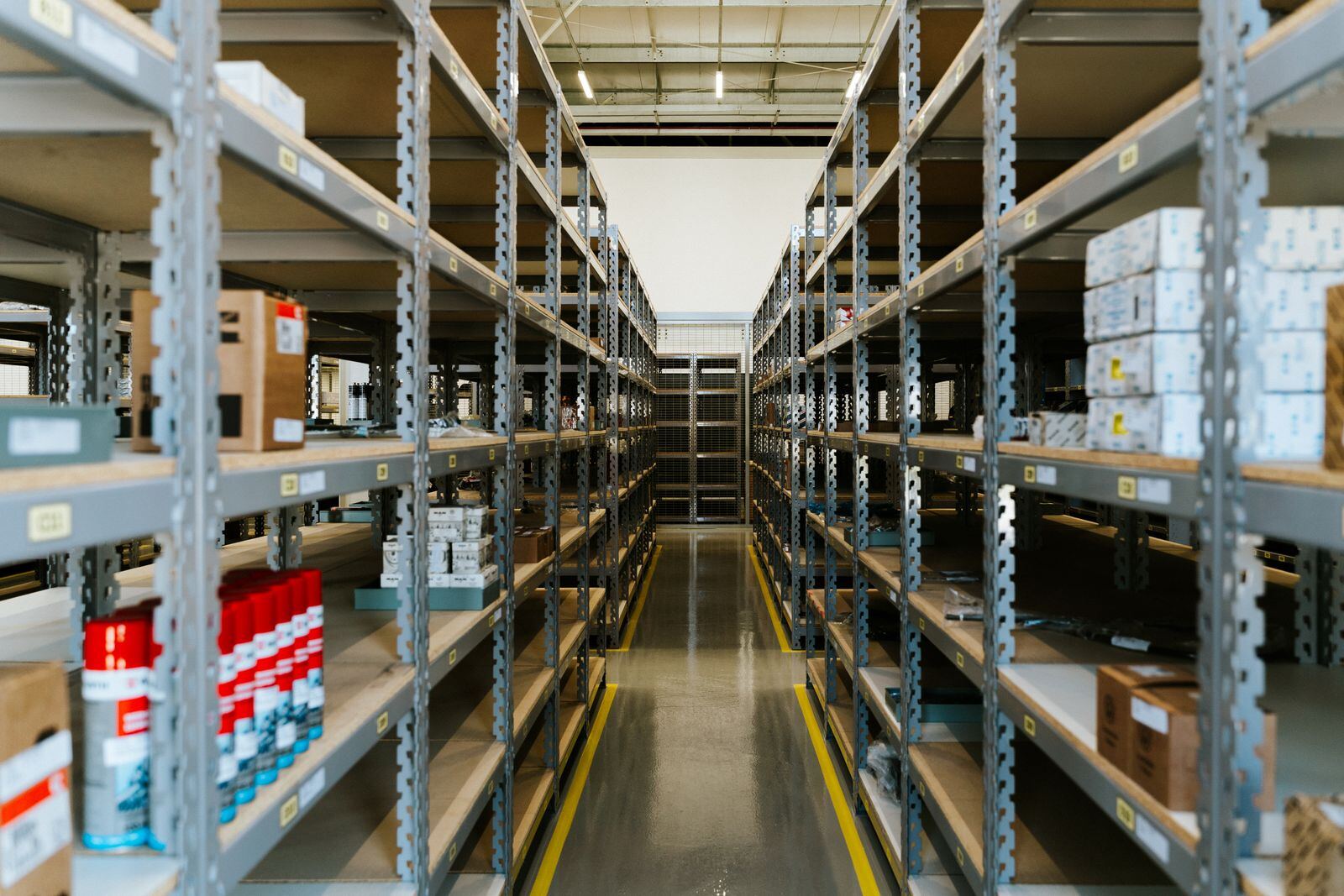
Rail engineering runs on stores. A depot overhauling rolling stock carries spares, fastenings, cable, consumables and paint for fleets that come and go, and when a fleet is withdrawn or a contract passes to another depot the shelves stay full. The same is true of the agricultural dealers and the plant hire yards on the edge of the borough, where a change of franchise or a sold off fleet leaves wearing parts and filters with no machine to fit. Add the pallets that stall in the sheds at iPort when a customer defaults, and the spread of stock is wide.
We sell it in one online auction, lotted for the buyers who actually want it. Rail spares go to other depots and to the heritage sector. Dealer parts go to farmers and repairers. Glass and fabrication stock goes to the trade. Pallet goods go to wholesalers and resellers who buy on price. Buyers collect in a fixed window and the space is back in use.
Depot spares and the shelves a withdrawn fleet leaves full
Rail spares are specialist, so we catalogue for the specialist. Each lot carries the part number and the fleet or vehicle type where it is known, the quantity and the state of the packaging. Sealed items with a certificate of conformity sell to other maintenance depots and to the component overhaul trade. Items without paperwork sell to the heritage railways and to the export market, and the description says which is which.
General engineering stock from the same stores, bearings, fastenings, hydraulic fittings, cable and paint, is lotted by type for the general workshop trade.
Dealer parts from the agricultural and plant trade follow their own rule. Boxed genuine parts are listed by number so other dealers can bid. Loose wearing parts, ground engaging tools, belts and filters go by the bin to the farmers and contractors who will fit them. Seasonal timing helps, and a summer sale suits harvest parts.
Low loaders on Wheatley Hall Road and slots at the interchange
The older estates at Kirk Sandall and Wheatley Hall Road were laid out when goods went by rigid lorry, so the first visit checks the approach, turning space, door dimensions and what is on site to load with. A stock sale then runs on a forklift at the door where there is one, a marshalling area for the van buyers and booked slots for the wagons. Rail spares can be heavy for their size, so we lot to what a pallet truck and a tail lift will take where there is no forklift.
At iPort and West Moor Park the sheds were built for constant HGV traffic, and where the dock and the yard are free the collection plan is mostly a matter of booking. Junction 3 of the M18 is close, with the A1(M) and M180 beyond it.
Rotherham, Barnsley, Sheffield, Wakefield, Worksop and Scunthorpe are within reach of the viewing day. Rail buyers and exporters bid online from anywhere in the UK and collect by haulier, which from here is the easy part.
What these sales can include
- Discontinued product lines
- Overordered components and parts
- Customer returns and graded stock
- Seasonal goods
- Ex display and showroom items
- Packaging and consumables
- Raw materials and fabrics
- Bulk trade stock on pallets
- Tools and hardware
- Homeware and furniture stock
- Clothing and footwear
- Building products and fixings
Running the sale
A stock clearance runs as an online timed auction, open for a week to ten days in most cases. There is a viewing day at your premises, or at the location where the stock has been gathered. Bidders inspect the lots, then bid online until each lot closes.
After the sale, buyers collect within a window agreed with you, usually a few days. Collection is the point where a stock sale needs organising. Buyers arrive with vans and lorries, lots have to be handed to the right person and the paperwork has to match. Our staff manage the door and sign each lot out.
If you cannot host viewing and collection, the stock can be moved to our premises or a third party warehouse where that is agreed. That adds transport cost but keeps the process away from your trading site.
The stock clearance auctions page covers when an auction is the right route, lotting the stock, offered as seen and the buyer's position, alternatives to auction.
Questions about selling in Doncaster
- Our spares were bought against a maintenance contract that has ended. Do they belong to us or to the operator?
It depends on the contract, and it is the first thing we ask. Spares bought on your account and invoiced to you are yours. Spares free issued by the operator, or bought on their account and held by you, are theirs, and they are the ones to decide. Many contracts have a clause on residual stock at expiry, so the answer is often written down already. We go through the stores with you and set aside anything that is not clearly yours to sell.
- Does glass stock sell at auction, or is it only good for cullet?
Finished glass in standard sizes, sealed units, sheet, mirror and toughened panels, is catalogued for glaziers and window fitters, and what it makes depends on whether it is stillaged, undamaged and in sizes that suit more than one job. Sizes cut for one job are harder and often go for cullet value. Stillages and A frames are worth including because the buyer needs them to move the glass. We describe thickness, size and quantity for each lot and let the trade decide what it is worth.
More questions about stock clearance
Related services
Guides
- What insolvency practitioners need from an auctioneer
For office holders realising physical assets. Covers the instruction letter, the asset schedule and valuation basis, retention of title, finance checks, site security, health and safety during the sale, and the reconciliation you need for the file.
- What happens to unsold lots
Not every lot sells, but the site still has to be cleared. This guide covers why lots go unsold, private treaty after the sale, lowering or removing the reserve, a later sale, scrap and WEEE recycling, and what disposal costs.