 Britannia Auctions
Stock clearance auctions in Northampton
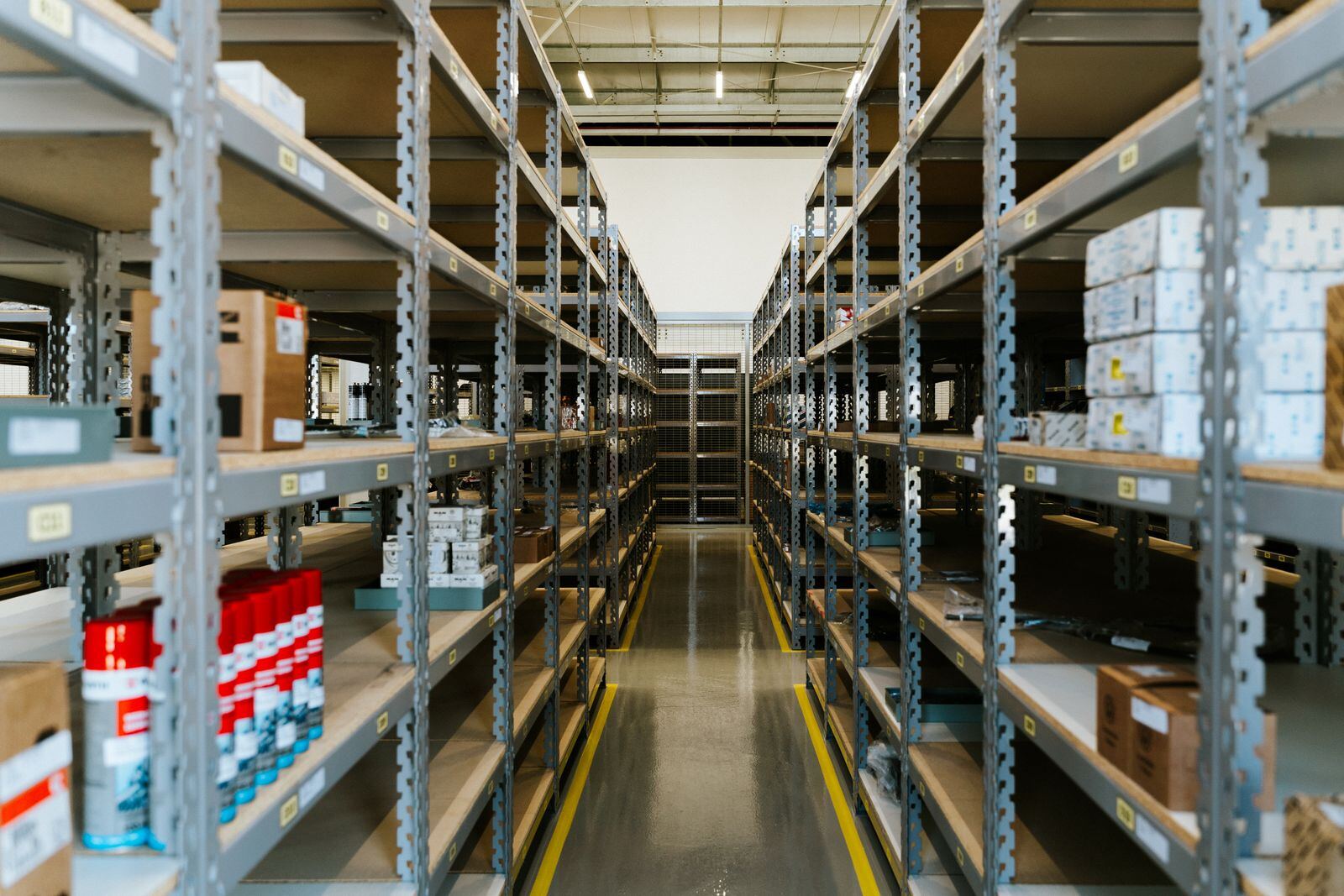
Two very different kinds of stock come up for clearance in this town. The first is footwear. The shoe trade is smaller than it was but it still holds leather, soles, lasts, components and finished pairs, and when a range is dropped or a factory order is cancelled the stock has to go somewhere. The second is whatever happens to be on the racking in the big sheds at Brackmills, Swan Valley and Pineham when a customer of a third party warehouse stops paying or walks away from a contract.
We sell both by online timed auction, lotted so that trade buyers, wholesalers and resellers can each find something to bid on. The sale runs for a week to ten days, buyers collect in a fixed window, and we account to you once the racking is empty. If the shed needs its bay back sooner, we move the stock to our own premises and sell it from there.
Leather, lasts and finished pairs from the shoe trade
Finished footwear sells by the size run. A lot is a style in a full run of sizes, or as close as the stock allows, because that is what a wholesaler or an online reseller can sell on. Odd sizes and returns are lotted separately as mixed and go for less. Anything carrying a retailer's own label needs their agreement first, and we ask for it.
Materials and components are worth listing as well. Hides, skins and leather offcuts sell to other makers and to leather goods workshops. Soles, heels, welts, thread and eyelets sell by the box to the same crowd. Lasts sell to makers who use the same system and to a small collectors' market.
Bidding is online, so shoe stock is offered to buyers across the country and abroad, and the pairs usually leave by carrier.
Abandoned customer stock in the Brackmills sheds
A third party warehouse holding goods for a customer who has stopped paying has a decision to make. The contract may give a lien and a right of sale after notice, and a sale is the way to turn a bay of dead stock back into a bay that earns. We look at the contract and the notices before we list, because the buyers need clean title and so do you.
The sheds are checked like any other site, for dock height, yard space, turning room and the loading equipment available on the day, with junctions 15 and 15a of the M1 a few minutes away. Collection runs in booked slots, full pallets at the dock and smaller lots from a marshalling area, with the window kept as short as the number of lots allows.
Wellingborough, Kettering, Daventry and Rugby are a short drive away. The rest bid online and collect by haulier, which is easy from here.
What these sales can include
- Discontinued product lines
- Overordered components and parts
- Customer returns and graded stock
- Seasonal goods
- Ex display and showroom items
- Packaging and consumables
- Raw materials and fabrics
- Bulk trade stock on pallets
- Tools and hardware
- Homeware and furniture stock
- Clothing and footwear
- Building products and fixings
Running the sale
A stock clearance runs as an online timed auction, open for a week to ten days in most cases. There is a viewing day at your premises, or at the location where the stock has been gathered. Bidders inspect the lots, then bid online until each lot closes.
After the sale, buyers collect within a window agreed with you, usually a few days. Collection is the point where a stock sale needs organising. Buyers arrive with vans and lorries, lots have to be handed to the right person and the paperwork has to match. Our staff manage the door and sign each lot out.
If you cannot host viewing and collection, the stock can be moved to our premises or a third party warehouse where that is agreed. That adds transport cost but keeps the process away from your trading site.
The stock clearance auctions page covers when an auction is the right route, lotting the stock, offered as seen and the buyer's position, alternatives to auction.
Questions about selling in Northampton
- The stock is a customer's and they have gone into administration. Who do we deal with?
The administrator, once one is appointed. Any lien you have over the goods for unpaid charges is a matter for your own terms, and the administrator has to agree to the sale and to how the proceeds are split. We can talk to them directly on your behalf. Until the position is agreed, the stock stays where it is and nothing is listed. Once it is agreed, the sale runs like any other.
- Our shoe stock is in a factory in the town centre with no yard. How does collection work?
By hand, mostly, and by van. Footwear is light and boxed, so we lot it in quantities a buyer can carry down a stair and load into a van on the street, and we book collection slots so only one buyer is loading at a time. For the larger wholesale lots, a carrier collects on pallets built at the door. If the building really cannot take it, we bring the stock to our own premises before the sale and buyers collect there.
More questions about stock clearance
Related services
Guides
- What insolvency practitioners need from an auctioneer
For office holders realising physical assets. Covers the instruction letter, the asset schedule and valuation basis, retention of title, finance checks, site security, health and safety during the sale, and the reconciliation you need for the file.
- What happens to unsold lots
Not every lot sells, but the site still has to be cleared. This guide covers why lots go unsold, private treaty after the sale, lowering or removing the reserve, a later sale, scrap and WEEE recycling, and what disposal costs.