 Britannia Auctions
Stock clearance auctions in Bradford
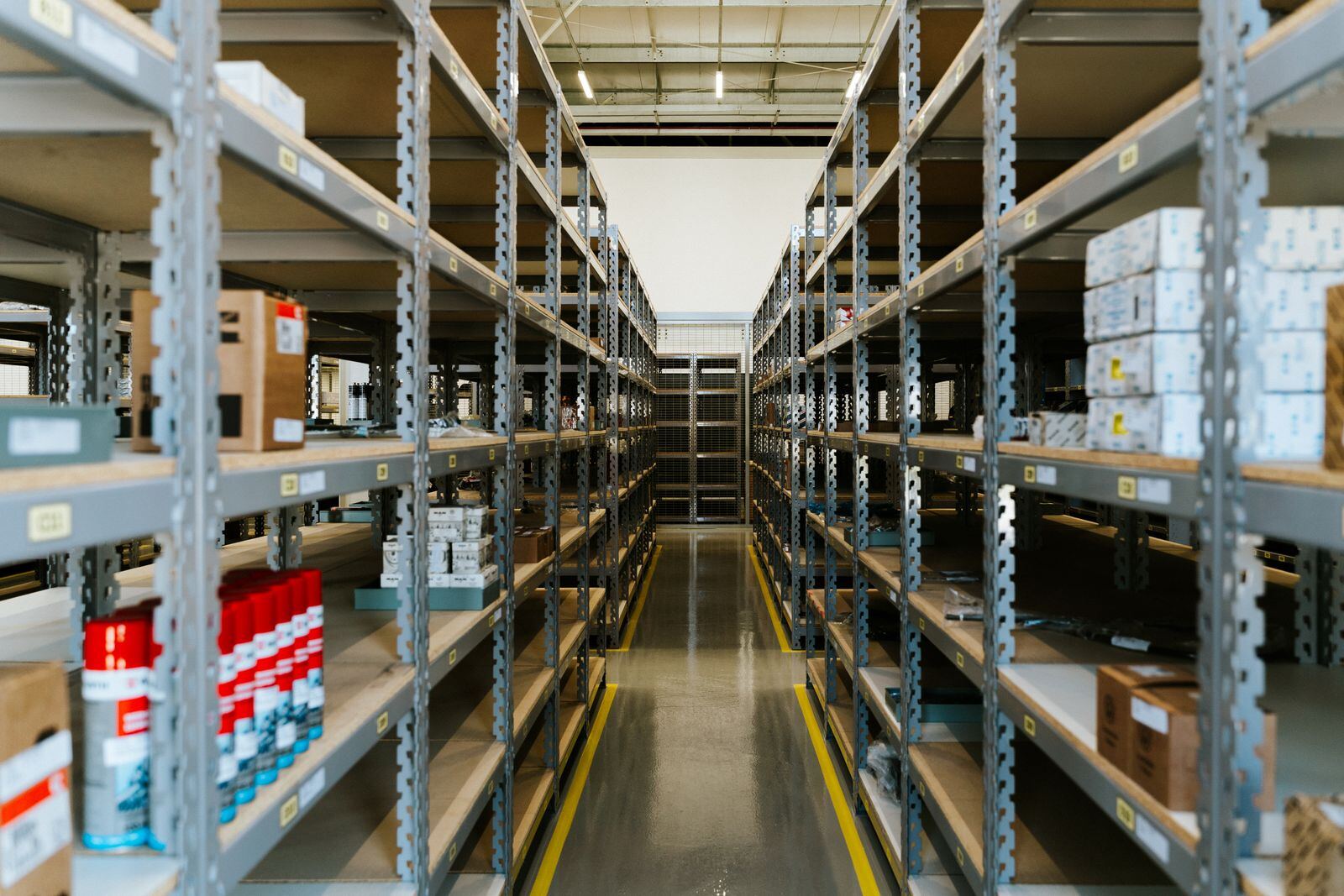
Mill stock is worth a proper look. Cones of yarn, wool tops, dyes and piece goods are what a spinner or finisher leaves behind when it scales back, and they are catalogued for the mills, weavers, knitters, craft wholesalers and exporters who read a count and a fibre without being told.
The other half of the district's surplus is food and packaging. Bakeries, sauce and snack producers carry ingredients, tubs, cartons and labels in depth, and a lost contract or a recipe change leaves pallets of it with no use. Printers and packaging firms along the Canal Road corridor have overruns and cancelled jobs.
We put both into online sales lotted for trade. The stock goes in a fixed window and the space is back. Describe what you have on the contact form and we will come and look.
Yarn and piece goods sold by count and fibre
Textile stock is sold on its description, so the catalogue does the work. Each lot states fibre, count, colour and quantity, with a photograph of the cone label or the piece end. Wool tops sell by the bale. Yarn sells by the cone lot, grouped by count and shade. Cloth sells by the piece or by the roll, with length and width given, and part pieces lotted separately from full ones.
Dyes and finishing chemicals are a specialist sale. Sealed drums with the supplier's label and a date are catalogued for other dyehouses. Opened containers and anything past its shelf life go to a licensed disposal route instead, and we say so on the first visit.
Mixed lots of odd shades and short cones are usually better bundled than split, because the work of splitting them rarely shows in the result. We will say how we would lot yours before the catalogue is written.
Working a clearance out of a mill building
Mill buildings are checked before anything else is planned. The first visit looks at the approach and turning space, the yard, the door dimensions, the floor the stock sits on and the condition and test record of any hoist or lift, and the findings go in the catalogue so buyers know before they bid. Pallets are sized for what the lift or the hoist can take. Collection runs by appointment, one vehicle in the yard at a time, and buyers with large lots send a smaller vehicle twice.
A food or packaging clearance at Euroway, Dudley Hill or Thornbury is checked the same way, and where there are loading bays, hard standing and a forklift the collection window can be shorter.
The trade in Halifax, Huddersfield, Keighley and Leeds is close enough to view in person before bidding, and the M606 puts the site a short drive from the M62. Bidding is online, and buyers further away collect by haulier.
What these sales can include
- Discontinued product lines
- Overordered components and parts
- Customer returns and graded stock
- Seasonal goods
- Ex display and showroom items
- Packaging and consumables
- Raw materials and fabrics
- Bulk trade stock on pallets
- Tools and hardware
- Homeware and furniture stock
- Clothing and footwear
- Building products and fixings
Running the sale
A stock clearance runs as an online timed auction, open for a week to ten days in most cases. There is a viewing day at your premises, or at the location where the stock has been gathered. Bidders inspect the lots, then bid online until each lot closes.
After the sale, buyers collect within a window agreed with you, usually a few days. Collection is the point where a stock sale needs organising. Buyers arrive with vans and lorries, lots have to be handed to the right person and the paperwork has to match. Our staff manage the door and sign each lot out.
If you cannot host viewing and collection, the stock can be moved to our premises or a third party warehouse where that is agreed. That adds transport cost but keeps the process away from your trading site.
The stock clearance auctions page covers when an auction is the right route, lotting the stock, offered as seen and the buyer's position, alternatives to auction.
Questions about selling in Bradford
- We printed packaging for a customer's product that has now been dropped. Can it be sold?
Not without the brand owner's agreement. Cartons and labels carrying a customer's brand would put their name on goods they never made, so the question goes to them first. Where they do not agree, the contract may cover the overrun, or the material goes for recycling. Unprinted stock is the straightforward part. Plain board, film, tubs and blank labels are lotted by the pallet for other packers and food producers.
- Do buyers want yarn in mixed counts and odd shades?
Some do. A mill wanting a specific count for a production run is looking for one shade in quantity and has no use for the rest. Craft wholesalers, hand knitting suppliers, weavers and exporters take mixed lots because they sell in small amounts to many customers. We lot the big runs of a single count on their own and gather the odds into pallet lots, so both kinds of buyer have something to bid on.
More questions about stock clearance
Related services
Guides
- What insolvency practitioners need from an auctioneer
For office holders realising physical assets. Covers the instruction letter, the asset schedule and valuation basis, retention of title, finance checks, site security, health and safety during the sale, and the reconciliation you need for the file.
- What happens to unsold lots
Not every lot sells, but the site still has to be cleared. This guide covers why lots go unsold, private treaty after the sale, lowering or removing the reserve, a later sale, scrap and WEEE recycling, and what disposal costs.