 Britannia Auctions
Stock clearance auctions in London
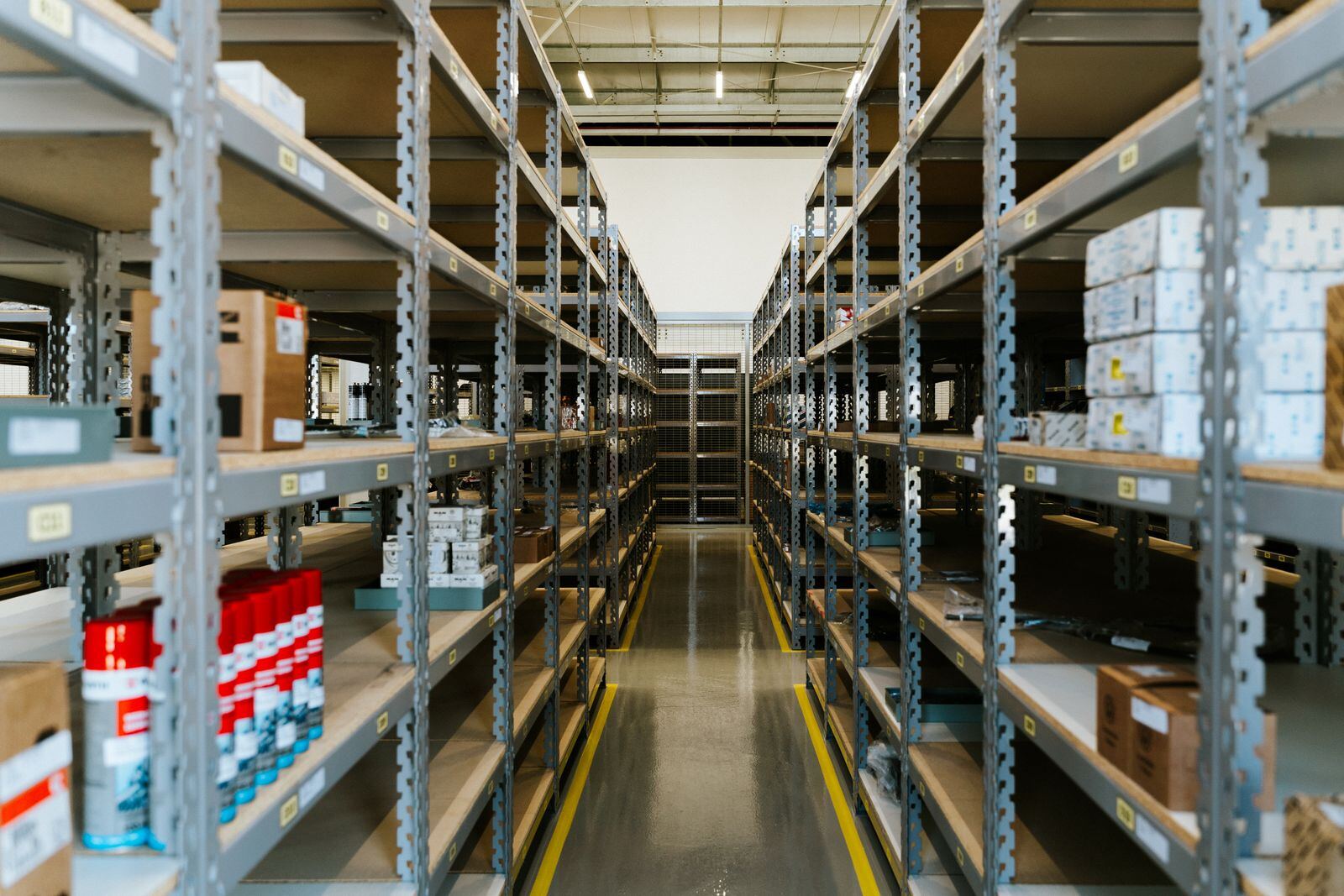
Space is the cost in London. A unit in Park Royal or on Purley Way is rented by the square foot at a rate that makes dead stock expensive to keep, so a range that has stopped selling or a contract that has ended needs to leave quickly. Food producers hold packaging and dry ingredients from lines they no longer run. Printers hold paper, board, ink and finished jobs that were never collected. Showrooms in Croydon and Wembley hold ex display furniture and homeware from a range change. Warehouses in Enfield and Barking hold pallets a customer walked away from.
We sell all of that by online auction, lotted for the trade. Wholesalers, market traders, online resellers and exporters bid from across the capital and the rest of the UK.
Tell us what you have, where it is and when the unit has to be empty.
Dead stock from the outer borough estates
The mix here is wider than in a manufacturing town, so the lotting has to work harder. A food producer's surplus is dry goods, packaging, film and labels, and it sells to other producers and packers on the same estate. Ambient stock with a long date sells to wholesalers and cash and carry firms. Printed matter sells to the trade by the pallet if it is unbranded, and goes for recycling if it carries a customer's name.
Showroom and ex display stock is different. Sofas, beds, kitchen displays and lighting sell to the public as well as the trade, and the sale is open to both. We lot the pallets of boxed stock for wholesalers and the display pieces singly, so a private buyer can take one sofa and a trader can take twenty.
Whatever the stock, it is counted before it is listed. Lots are offered as seen under the auction terms, and buyers are expected to inspect before bidding, which is why accurate descriptions matter.
Collection by van inside the emission zones
Collection in London is planned around the roads. A lorry has to meet the Direct Vision Standard and pay the Low Emission Zone charge, and a van is quicker through the North Circular in any case, so vans do much of the work. We lot with that in mind, keeping pallets to a size a van and a tail lift can manage, and we give each buyer a slot so the yard is never full.
Whether a site can take an artic is checked on our first visit, along with turning space, the loading door and the floor level, and it goes in the catalogue. The yards at Park Royal, Brimsdown, Barking and Dagenham Dock were built for that kind of traffic. Inner units and railway arches are usually a van and pallet truck job over more days.
Croydon, Romford, Enfield and Slough are near enough to attend a viewing, as is Kent through Dartford, and the rest of the UK bids online and collects through hauliers who work the capital every day.
What these sales can include
- Discontinued product lines
- Overordered components and parts
- Customer returns and graded stock
- Seasonal goods
- Ex display and showroom items
- Packaging and consumables
- Raw materials and fabrics
- Bulk trade stock on pallets
- Tools and hardware
- Homeware and furniture stock
- Clothing and footwear
- Building products and fixings
Running the sale
A stock clearance runs as an online timed auction, open for a week to ten days in most cases. There is a viewing day at your premises, or at the location where the stock has been gathered. Bidders inspect the lots, then bid online until each lot closes.
After the sale, buyers collect within a window agreed with you, usually a few days. Collection is the point where a stock sale needs organising. Buyers arrive with vans and lorries, lots have to be handed to the right person and the paperwork has to match. Our staff manage the door and sign each lot out.
If you cannot host viewing and collection, the stock can be moved to our premises or a third party warehouse where that is agreed. That adds transport cost but keeps the process away from your trading site.
The stock clearance auctions page covers when an auction is the right route, lotting the stock, offered as seen and the buyer's position, alternatives to auction.
Questions about selling in London
- We have ex display homeware from a showroom in Croydon. Is that a stock sale or a furniture sale?
It is both, in one catalogue. Boxed stock from the stockroom is lotted by the pallet for wholesalers and resellers. The display pieces are lotted singly or in small groups, photographed properly, and sold to anyone who registers, trade or private. Upholstered items need the fire label to be sold, and we check for it. Collection is set over two or three days with slots, because a showroom on Purley Way cannot have forty vans arriving at once.
- The landlord wants the unit back at the quarter day. Is that enough time?
It depends how far off it is. From first contact, cataloguing takes a few days, the auction runs a week to ten days, and collection follows over two or three days, with each of those set by the number of lots and the access. Three to four weeks gives room. If the quarter day is closer than that, we can collect the stock ourselves and sell it from our own premises, so the unit is handed back on time and the sale runs at its own pace afterwards.
More questions about stock clearance
Related services
Guides
- What insolvency practitioners need from an auctioneer
For office holders realising physical assets. Covers the instruction letter, the asset schedule and valuation basis, retention of title, finance checks, site security, health and safety during the sale, and the reconciliation you need for the file.
- What happens to unsold lots
Not every lot sells, but the site still has to be cleared. This guide covers why lots go unsold, private treaty after the sale, lowering or removing the reserve, a later sale, scrap and WEEE recycling, and what disposal costs.