 Britannia Auctions
Surplus equipment sales in Derby
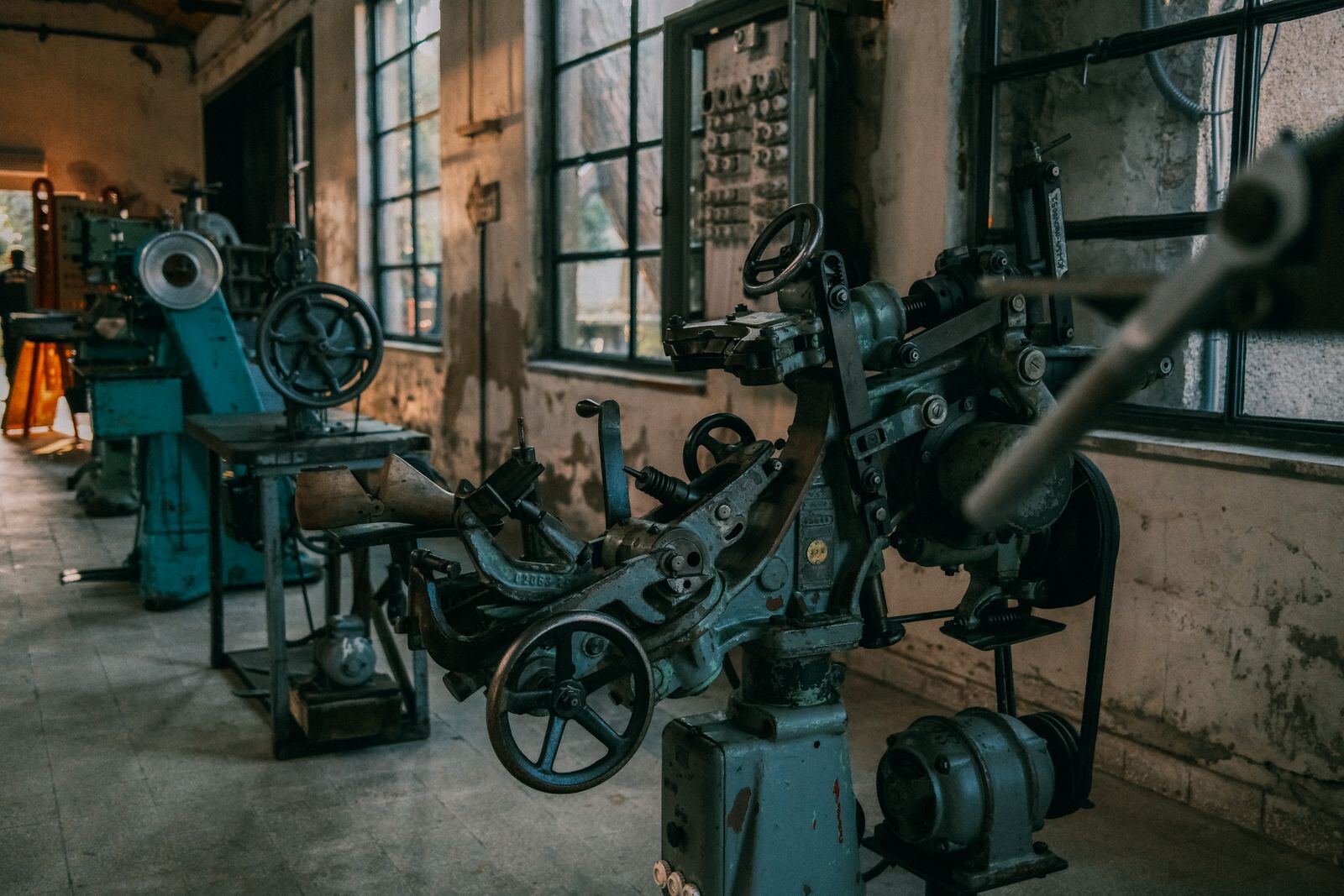
The supply chain around Derby's aerospace and rail plants is built from machining and fabrication shops, and those shops carry surplus in a particular form. A package of work ends and the machining centre bought for it goes quiet. The inspection kit stays calibrated for a year and then does not. Jigs and fixtures for a part that is no longer made fill a rack. A compressor bought for a second shift runs one.
None of that is scrap, and none of it needs the business to stop to sell it. We catalogue the items where they stand, sell them by online timed auction over a week or two, and manage viewing and collection around production. Buyers for precision kit read a catalogue closely. The trade in Burton upon Trent, Nottingham, Ilkeston and Chesterfield is near enough to view in person, and bidding is online and open to the whole of the UK, so the description has to carry the machine.
Machining centres and the measuring kit around them
A five axis machining centre from a Derby supplier is the sort of lot that is written for the whole country, because the bidding is online. The machine is one part of the value. The rest is in what surrounds it, tool holders, probes, a fourth axis unit, fixtures, and the inspection equipment that proved the parts: coordinate measuring machines, surface testers, gauges and hardness testers.
We catalogue those separately and describe them properly, with serials and calibration dates, and the last certificate if you have it. A buyer who can see that a CMM was in calibration last month bids differently from one looking at a photograph of a grey box.
Fixtures and jigs for a part that is no longer made have little use to anyone else, and we will say so rather than clutter the sale. The raw material in them, and the tombstones and vices they sit on, do sell.
Rigging without stopping the shop
The southern estates, Osmaston Park and Raynesway, were laid out for goods vehicles, but the outside of the job is still checked: the approach, turning space, the loading door and the ground. The inside is where it needs most thought. A machining centre in the middle of a live shop comes out past machines that are cutting metal, and the route has to be agreed with you before anyone bids.
We walk it before the sale, note what needs a crane or skates, and put that in the catalogue. Disconnection is done by a competent electrician, never by the buyer. Coolant and swarf are dealt with before collection, and the machine is left on its feet for the rigger.
Collection runs in booked slots within a window you set. A planned shutdown week, if you have one, is often the easiest time to get a big machine out. Our staff attend and release lots once their invoices are paid only.
What these sales can include
- Machine tools and CNC equipment
- Forklifts and access platforms
- Pallet racking and shelving
- Compressors and air tools
- Welders and fabrication kit
- Vehicles and trailers
- Test and measurement equipment
- Site accommodation and containers
- Packaging and labelling machines
- Obsolete stock and components
- Office furniture and IT
- Catering and canteen equipment
Selling from a live site
Most surplus sales happen inside a business that is still trading. That changes how we work. Cataloguing is done around your shifts. Viewing is by appointment or on a single day, with visitors signed in and escorted. Collection is booked in slots so that nobody is moving a machine through the middle of a production run.
Items that are still bolted down, plumbed in or connected to services are isolated by a competent person before collection, with electrical and gas disconnection done by qualified people. Buyers arrange and pay for the removal of their lots, and they do not disconnect services themselves.
Tell us about anything that affects access: weight limits on floors, door heights, crane availability, restricted hours. It all goes in the catalogue so buyers plan the removal properly.
The surplus equipment sales page covers what counts as surplus, one sale or a standing arrangement, pricing, reserves and the buyer's premium, after the sale.
Questions about selling in Derby
- Our machines have been used on aerospace work. Does that affect the sale?
Only in the paperwork. The machines themselves sell to whoever wants them. What buyers value is the record that comes with an aerospace supplier's kit, the service history, calibration certificates, maintenance log and software licences, because it tells them the machine was looked after. Give us those documents and we will put them in the catalogue. Any customer owned tooling or fixtures need to go back to the customer before the sale, and that is worth checking early.
- Would a sale disrupt an audit or a customer visit?
It need not. Cataloguing is quiet, a couple of people with a camera for a few hours or longer depending on the number of lots, and can be done on a day you choose. Viewing is by appointment with visitors escorted, and we can keep it to a single half day. Collection is the noisy part, and you set the window for it. If a customer visit falls in the middle, we move the slots. The date the auction closes is fixed once published, but everything around it is yours to arrange.
More questions about surplus equipment
Related services
Guides
- Preparing machinery and equipment for sale
What to do before viewing day. Keep the machines that can be run safely available to demonstrate, isolate the rest, clean but do not repaint, find the tooling and manuals, and sort out access for removal.
- How used machinery is valued
Buyers pay for what a machine will do for them, less what it costs to get it out and running. This guide explains how make, hours, tooling, demand and removal cost feed a guide price, and why that price is not book value.