 Britannia Auctions
Business closure auctions in Bradford
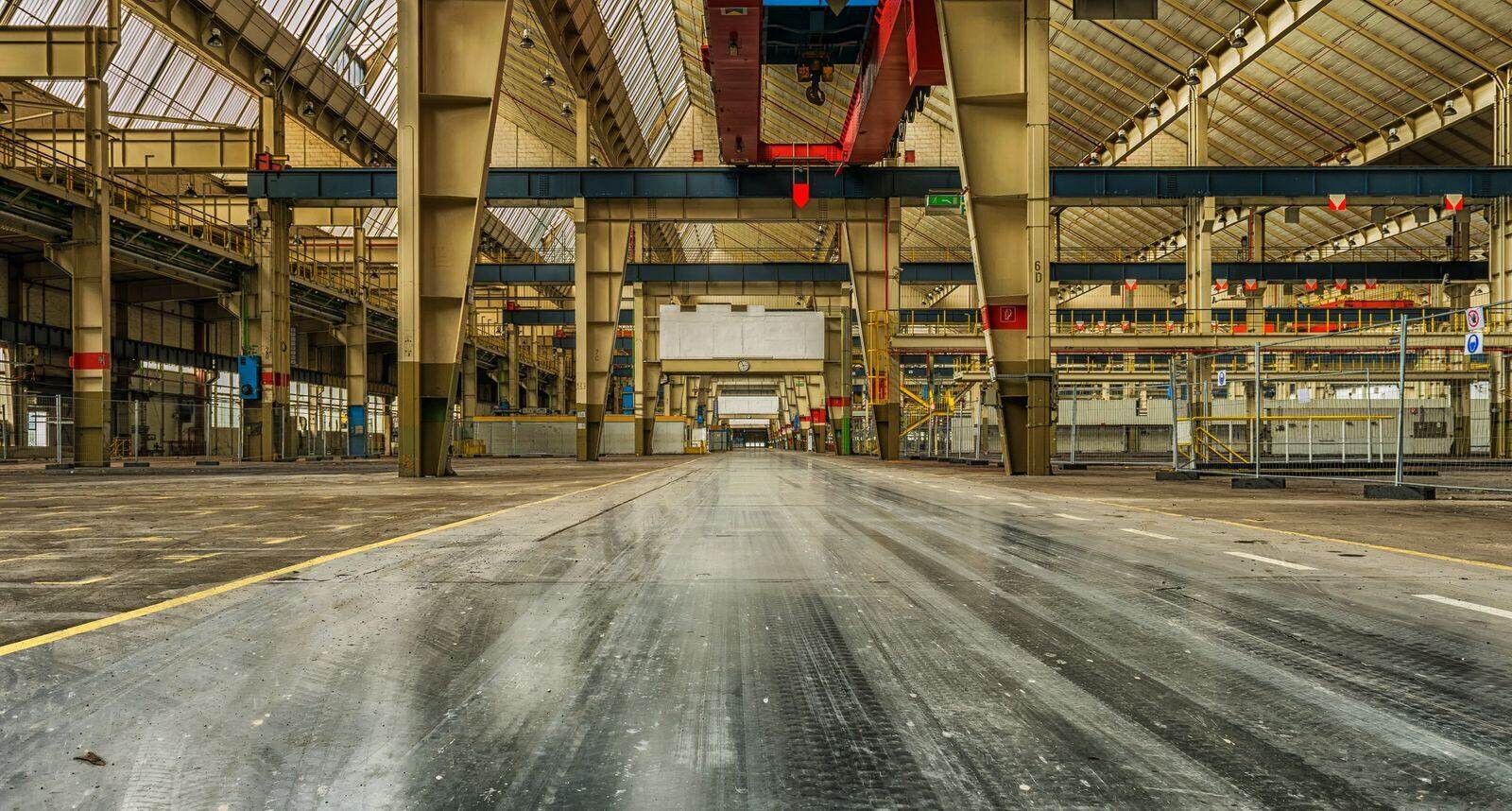
Bradford's older factories were built for a different scale of trade, and closing one is as much about the building as the machines. A dyehouse or a finishing works in a stone mill has plant on several floors and a yard that a low loader will not like. A bakery in a newer unit at Euroway or on Bowling Back Lane is easier to empty but has ovens and provers built into the fabric.
We sell both kinds. The machines are catalogued where they stand and sold online to the trade, with a viewing day on site. Bidding is not limited to the area, and the textile and food trades in Halifax, Huddersfield, Keighley and Leeds are within easy reach of it. The rigging is planned before the sale opens, not after.
Tell us where the plant is and when the landlord wants the keys, and we will start from there.
Dyehouses and finishing plant come out in a set order
A finishing works is a chain. Scouring, dyeing, drying and pressing machines sit in a line, each fed by the one before, and the steam, water, power and effluent services run under all of them. The buyer of the stenter cannot take it until the machines either side are out, and none of it can be cut free until the boiler has been shut down and made safe. We walk the line when we first visit and write the removal order into the catalogue so that every buyer knows their slot.
Yarn, dyed cloth, wool tops and grey cloth sell in the same auction. Spinners and merchants still trade in the district, and unopened dyestuffs and auxiliaries are lotted for other dyehouses rather than left for disposal.
Food producers are a second line of work for us here. Ovens, provers, mixers, depositors and packing lines from bakery and sauce units are lotted for other food firms, and refrigeration and stainless tables have the widest use of anything in the building.
Steep approaches and who pays for the rigger
The mill sites in the Canal Road corridor and around Shipley were built before articulated lorries. Tight yards, steep ramps, loading doors on the upper floors and no room to swing a crane are common. That is not a reason to give up on an auction, but it is a reason to plan it properly. We get a rigger to look at the awkward lots before the sale and write the removal method into the lot description, so the buyer prices the job in and nobody argues on collection day.
Where a machine on an upper floor cannot come out in the time the lease allows, we can bring it to our own premises and sell it from there. There is a cost to that, and we set it against the risk of running past the handback date before you decide.
The newer estates at Euroway, Dudley Hill, Thornbury and Staithgate Lane were laid out later and sit close to the M606. We still measure the yard, the doors and the turning circle before we set the collection days, because the unit matters more than the estate.
What these sales can include
- Production machinery
- Finished goods and raw materials
- Warehouse racking
- Forklifts and handling equipment
- Vans, trucks and trailers
- Office furniture and computers
- Workshop tools and benches
- Compressors and site services
- Catering equipment
- Retail fittings and display units
- Vehicle lifts
- Packaging machinery
How we run the sale
We visit, agree the scope and catalogue the lots on site. Everything from the main machines down to the contents of the stores can be included. Small items are grouped into sensible lots so that nothing is left behind.
The sale runs online as a timed auction. Bidders register, view the lots on a set viewing day at your premises, and bid until the closing time. Lots close in sequence, and a late bid extends the closing time on that lot.
Buyers pay the hammer price plus the buyer's premium, with VAT charged where it applies and shown separately on the invoice. They pay us, and you are paid once the sale is reconciled and the collection window has closed, from cleared funds. The auction terms set out what happens if a buyer does not pay or collect. The details for your sale are explained when we discuss it.
The business closure auctions page covers closure sales and the pressure of the date, who needs to agree before you sell, stock, records and the things people forget, collection, clearance and the empty building, when a closure sale is not the answer.
Questions about selling in Bradford
- Our bakery ovens were built in place. Do they sell, and who takes them apart?
They are lotted. Travelling ovens, rack ovens, provers and depositors are used by other bakeries and by the dealers who rebuild them, and the lot is sold with dismantling as the buyer's responsibility. We state that in the catalogue and the buyer brings a contractor who knows the make. Gas and electrical disconnection is done by qualified people before collection starts, and buyers never disconnect services themselves. If the oven is in the landlord's lease as a fixture, check that before we list it.
- Is there a market for part finished cloth and yarn on the floor?
Yes, though it is smaller than for finished goods. Greige cloth and undyed yarn sell to other finishers and to merchants who deal in job lots. Pieces part way through the dyeing or finishing process are harder, because the buyer has to match what was done. We lot those separately with an honest description and the batch records, and let the trade decide. Do not clear it before we have looked, because what it brings still comes off the disposal bill.
More questions about closure auctions
Related services
Guides
- Closing a business: a timeline for selling the assets
Work backwards from the day you hand the site over. This guide covers lease end and dilapidations, when to instruct, when staff should leave, when to keep the power on, and how to leave enough room for collection and making good.