 Britannia Auctions
Business closure auctions in Leicester
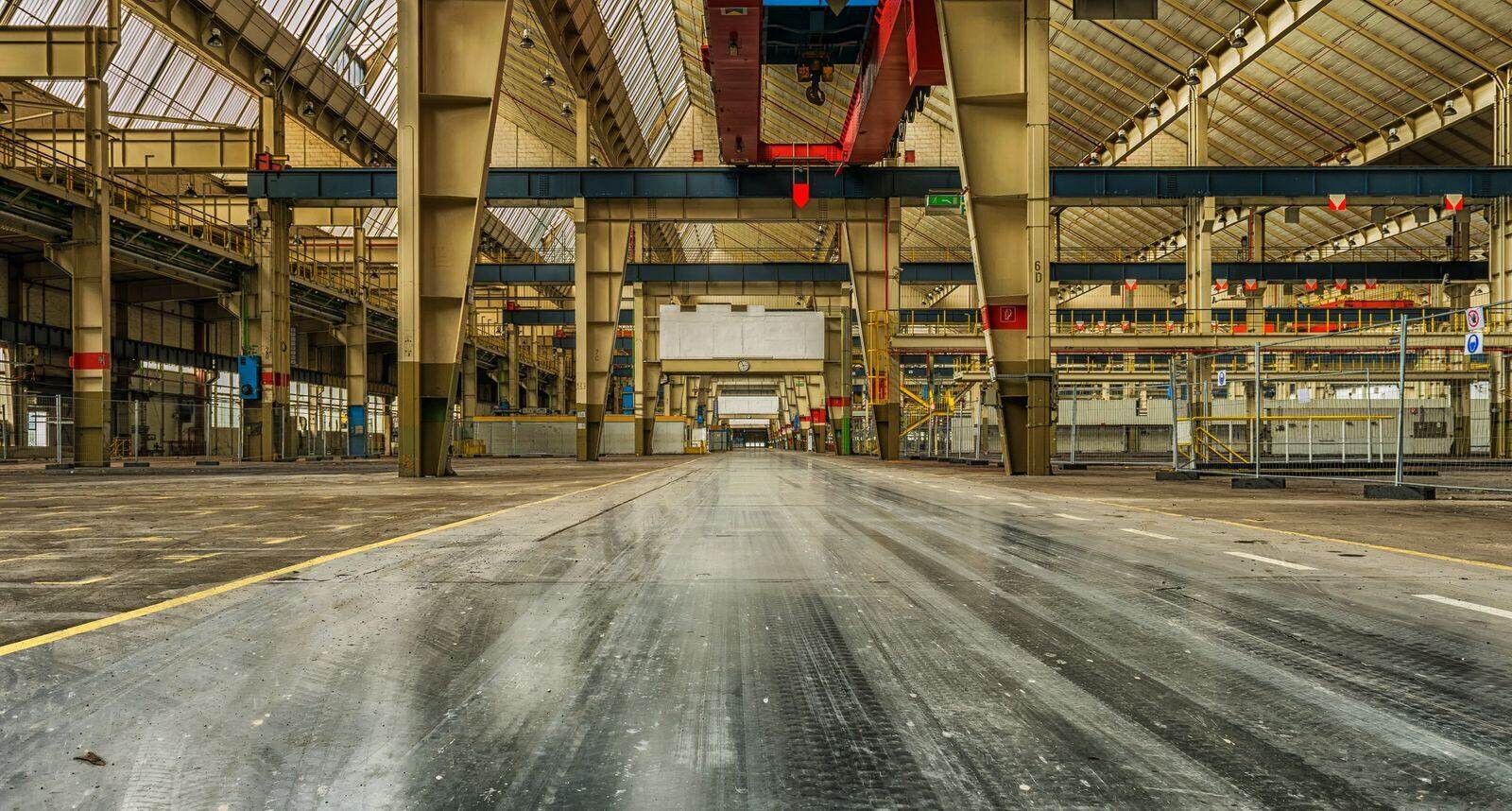
A textile workshop on one of the older streets east of the city centre closes differently from a distribution shed at Meridian Business Park. The workshop has rows of sewing machines, cutting tables, a fusing press and rolls of cloth on a first floor with a narrow stair. The shed has runs of pallet racking, forklifts, a dock full of stock and an office upstairs. Both have a landlord waiting for the keys.
We run closure sales for both kinds of business in Leicester and the towns around it. We catalogue on site and run the sale online for a week or two. Then we manage the collection days so that the building is empty on the date you agreed. Where the site cannot take buyers, we collect the lot and sell from our own premises.
Tell us what the building holds and when it has to be empty. We will tell you which route fits.
Textile workshops close with the cloth still on the racks
Clothing manufacture in this city runs on short contracts. When the retailer moves the order abroad, a workshop can go from full production to closure in a matter of weeks, and the stock is often the part the owner forgets. Rolls of fabric, trims, thread and boxed garments are lotted in bulk for other workshops and for traders. Do not skip it or give it away before we have seen it.
The machines are the easier part. Industrial sewing machines, overlockers, cutting tables, fusing presses and steam finishing tables are used across the clothing trade, and the workshops at Hinckley, Loughborough and Wigston are close enough to view before they bid. We lot them individually where the machine justifies it and in rows where it does not.
Food processors and print firms closing in the same city bring a different list: stainless tables, chillers, packing lines and guillotines. The same sale format handles all of it.
Getting lots out of the inner city streets
Access is the practical problem in the older parts of the city. Many workshops are on upper floors of converted factories with a goods lift that may or may not work, and the street outside will not take an articulated lorry. A closure sale here needs a collection plan before it needs a catalogue.
We look at the building when we walk the site and work out how lots can leave it. The weight and dimensions of each machine, the stair, the goods lift and the door decide what handling equipment or specialist help a buyer has to bring, and we write that into the lot. Where the route rules out buyer collection, the contents can come to our own premises and sell from there, which also frees your building sooner.
On the outer estates at Braunstone Frith or near junction 21 the difficulty is usually volume rather than the route out, so the collection window is planned around the loading bay and the handling equipment on site.
What these sales can include
- Production machinery
- Finished goods and raw materials
- Warehouse racking
- Forklifts and handling equipment
- Vans, trucks and trailers
- Office furniture and computers
- Workshop tools and benches
- Compressors and site services
- Catering equipment
- Retail fittings and display units
- Vehicle lifts
- Packaging machinery
How we run the sale
We visit, agree the scope and catalogue the lots on site. Everything from the main machines down to the contents of the stores can be included. Small items are grouped into sensible lots so that nothing is left behind.
The sale runs online as a timed auction. Bidders register, view the lots on a set viewing day at your premises, and bid until the closing time. Lots close in sequence, and a late bid extends the closing time on that lot.
Buyers pay the hammer price plus the buyer's premium, with VAT charged where it applies and shown separately on the invoice. They pay us, and you are paid once the sale is reconciled and the collection window has closed, from cleared funds. The auction terms set out what happens if a buyer does not pay or collect. The details for your sale are explained when we discuss it.
The business closure auctions page covers closure sales and the pressure of the date, who needs to agree before you sell, stock, records and the things people forget, collection, clearance and the empty building, when a closure sale is not the answer.
Questions about selling in Leicester
- Our workshop is on the second floor of an old factory. Can buyers still collect?
Sometimes, and sometimes not. If the goods lift works and the landlord allows buyers through the building, we run collection days on site with our staff present. If the lift is out or the shared stair is the only route, we usually collect everything ourselves in one go and sell from our own premises. That takes the buyers away from your building and gives the landlord an empty floor earlier. We decide this at the site visit, not after the sale.
- The retailer cancelled the contract and we have finished garments in boxes. Will they sell?
Yes, usually in bulk lots. Finished garments, cut work, fabric rolls and trims all sell to traders and to other workshops. Check the contract first, because some retailers own the cloth or forbid resale of branded work, and labels may need removing. Once that is clear, we photograph and lot the stock alongside the machines so that one sale clears the whole floor.
More questions about closure auctions
Related services
Guides
- Closing a business: a timeline for selling the assets
Work backwards from the day you hand the site over. This guide covers lease end and dilapidations, when to instruct, when staff should leave, when to keep the power on, and how to leave enough room for collection and making good.