 Britannia Auctions
Surplus equipment sales in Reading
Reading's surplus is as likely to come out of an office park as a factory. A technology firm at Green Park or Thames Valley Park gives up a floor and leaves behind desks, chairs, meeting room tables, monitors, racks of servers and a kitchen fit out that all has to be gone by the lease end date. That is a surplus sale as much as a workshop clearance is, and we run it the same way. The items are catalogued in place and sold by online timed auction. Collection is in booked slots that the building manager approves.
The trade estates produce the other kind. Engineering workshops on Loverock Road, vehicle repairers on Portman Road, the plant hire yards across the district and the distribution units at Theale all replace kit and end up with the old machine in the way. We sell that too, while the business keeps working around it.
Office floors and IT from the business parks
Office furniture sells in volume or not at all. A hundred matching desks and chairs from one floor makes a lot that a furniture dealer or a growing company can use, while ten mixed ones are barely worth the catalogue entry. So we group furniture by type and quantity, photograph a sample and state the count. Meeting room tables, boardroom furniture, storage walls and breakout seating sell better as sets.
IT is a different discipline. Servers, switches, laptops and monitors have value, but only once the data is gone. We will not catalogue storage until you confirm it has been wiped or the drives removed, and we say in the catalogue what has been done. Buyers are refurbishers and smaller firms across the country, bidding online.
Catering and canteen kit from an office kitchen, coffee machines, dishwashers, fridges and counters, is catalogued for cafes and small businesses, and the trade from Wokingham to Newbury is within easy reach. It goes in the same sale.
Vehicle repair and engineering kit from the trade estates
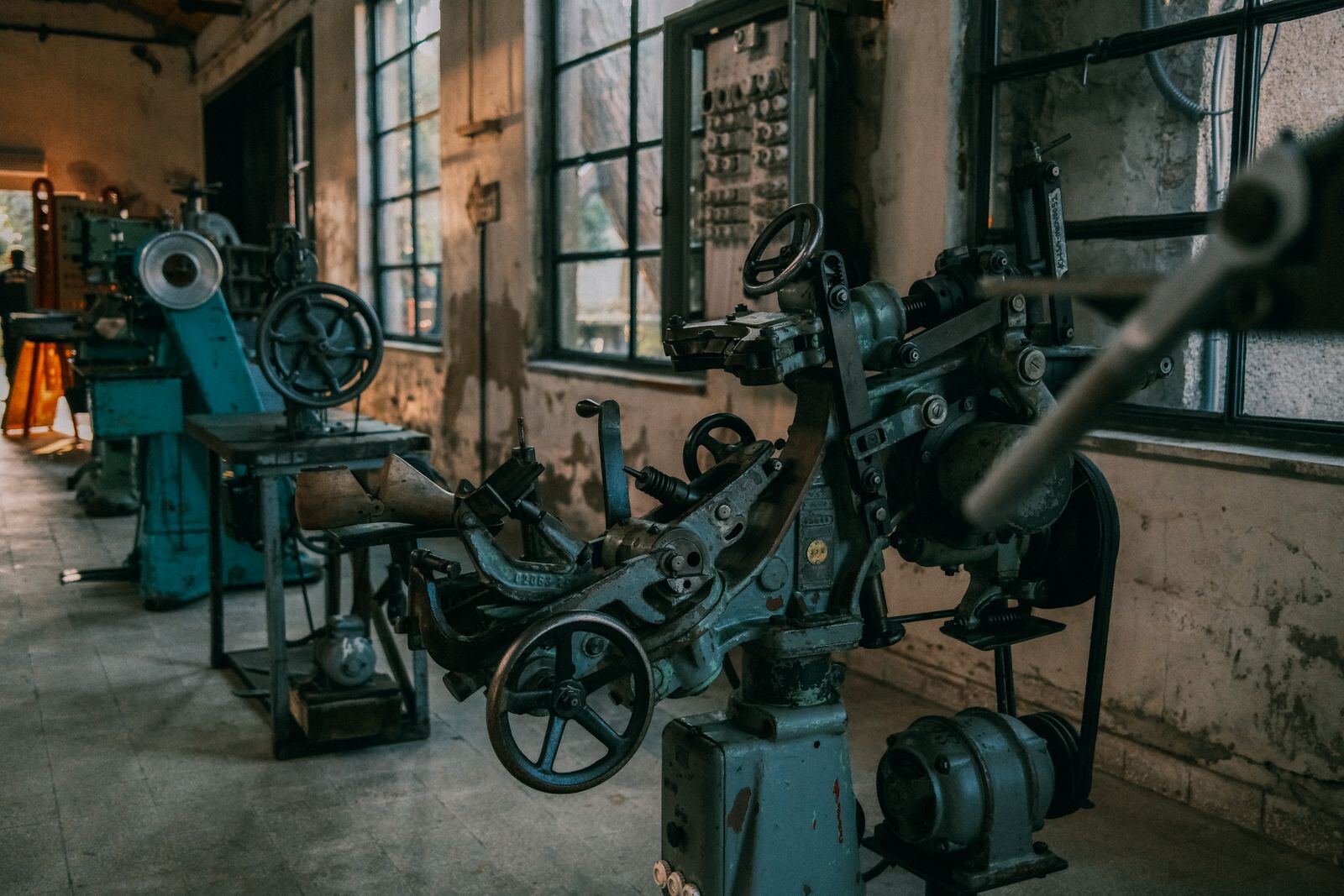
Battle Farm and the Robert Cort estate are where the lifts, compressors, lathes and welding sets come from. Vehicle lifts are catalogued for garages across Berkshire and beyond, and a current inspection report means one can go back to work sooner. Machine tools go to other small engineering shops and to dealers bidding online, and the paperwork and hours matter as much here as anywhere. Vans and pickups from a fleet renewal sell on mileage, age, history and condition, with the sign writing removed if you can manage it.
Collection on the trade estates is planned from what we find at the visit: the roads and turning space, the loading door, and whether the unit still has a forklift once the business has sold its own. A machine in the back corner of a live workshop still needs its route to the door walked before anyone bids, and we do that. Buyers collect in booked slots, one at a time, and our staff release each lot against a paid invoice.
Plant hire yards run the same way, with the buyer's own transporter in the slot.
What these sales can include
- Machine tools and CNC equipment
- Forklifts and access platforms
- Pallet racking and shelving
- Compressors and air tools
- Welders and fabrication kit
- Vehicles and trailers
- Test and measurement equipment
- Site accommodation and containers
- Packaging and labelling machines
- Obsolete stock and components
- Office furniture and IT
- Catering and canteen equipment
Selling from a live site
Most surplus sales happen inside a business that is still trading. That changes how we work. Cataloguing is done around your shifts. Viewing is by appointment or on a single day, with visitors signed in and escorted. Collection is booked in slots so that nobody is moving a machine through the middle of a production run.
Items that are still bolted down, plumbed in or connected to services are isolated by a competent person before collection, with electrical and gas disconnection done by qualified people. Buyers arrange and pay for the removal of their lots, and they do not disconnect services themselves.
Tell us about anything that affects access: weight limits on floors, door heights, crane availability, restricted hours. It all goes in the catalogue so buyers plan the removal properly.
The surplus equipment sales page covers what counts as surplus, one sale or a standing arrangement, pricing, reserves and the buyer's premium, after the sale.
Questions about selling in Reading
- The building manager will not allow viewers on the floor. Can you still sell the contents?
Yes. Office contents are well suited to being sold from photographs and a detailed catalogue, and a buyer of furniture or IT can bid without viewing. Where the building will not take viewers or collection lorries, we bring the contents to our own premises and sell from there, which also gets the floor back to the landlord sooner. If the manager will allow a single supervised collection day, that is usually enough and saves the removal cost. We will talk to them with you.
- We are a technology firm. Do we need to worry about data on the equipment before it is sold?
Yes, and it has to be dealt with before anything is catalogued. Laptops, servers, phones and copiers with hard drives all hold data, and it must be wiped to a recognised standard or the drives removed before we catalogue them. We ask for confirmation in writing and we describe in the catalogue what has been done. A certified data destruction firm can do it on site if you do not have the tools. Once that is done, the equipment can be catalogued and offered to refurbishers online.
More questions about surplus equipment
Related services
Guides
- Preparing machinery and equipment for sale
What to do before viewing day. Keep the machines that can be run safely available to demonstrate, isolate the rest, clean but do not repaint, find the tooling and manuals, and sort out access for removal.
- How used machinery is valued
Buyers pay for what a machine will do for them, less what it costs to get it out and running. This guide explains how make, hours, tooling, demand and removal cost feed a guide price, and why that price is not book value.