 Britannia Auctions
Surplus equipment sales in Swindon
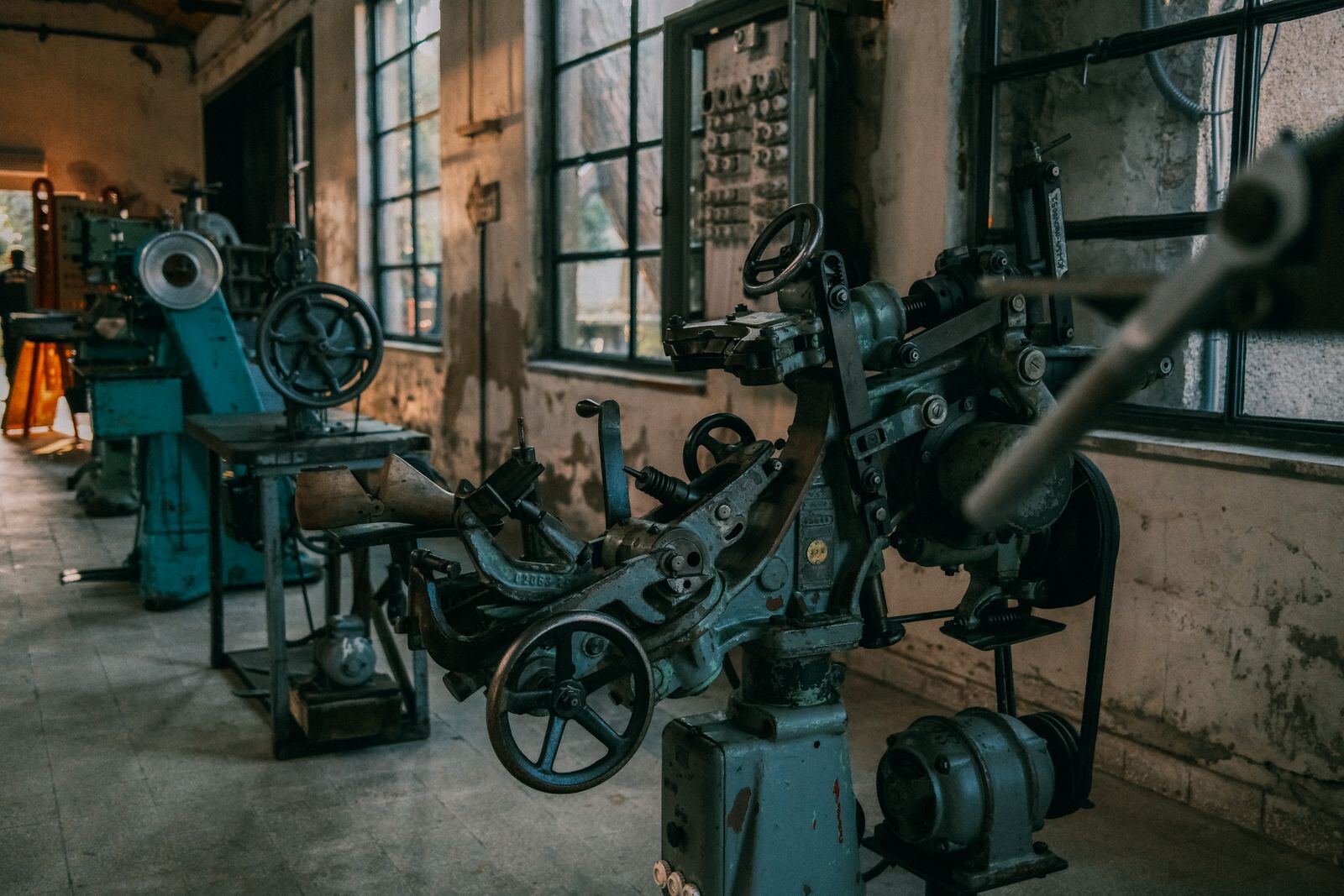
When a big customer changes, every firm that supplied it changes with it. The engineering and component shops around South Marston and on Dorcan and Cheney Manor built up presses, fixtures, jigs and measuring kit for parts that are no longer ordered, and are now retooling for whoever comes next. What they no longer need is surplus in the plainest sense. The distribution sheds at Blagrove and Symmetry Park add forklift fleets and racking when a contract ends, and the electronics and pharmaceutical firms on the north and east sides clear benches and instruments when a product finishes.
We sell all of it from a business that carries on trading. Our staff catalogue on site, the auction runs online for a week or two with a booked viewing morning, and buyers collect in slots after paying. The trade in Chippenham, Cirencester, Marlborough and Wantage is near enough to come and see the lots, and the M4 brings buyers from further out.
Supplier workshops retooling for new customers
The awkward part of a supplier's surplus is that some of it was made for one part. A dedicated fixture or a gauge for a component nobody makes any more has a value close to scrap. The machines it sat on are another matter. Power presses, press brakes, CNC turning and milling centres, coordinate measuring machines, welding cells and the compressors that fed them all have a market that runs across the country.
We sort the two apart before we catalogue. General purpose machines are lotted one at a time with make, model, year, capacity and control system. Dedicated tooling is grouped in lots where a buyer might reuse the steel or the components. Anything the customer owns, and in component shops that is often the fixtures, stays out of the sale.
Collection from these estates is planned from what we see at the visit: the approach and turning space, the yard, the loading door and the route out. How a press leaves depends on its weight and dimensions and on the removal the buyer arranges.
Pick and place lines and the test benches around them
Electronics assembly on the north side of the town produces a surplus that most auctioneers see rarely. Surface mount lines with screen printers, pick and place machines, reflow ovens and conveyors, and the inspection and test benches beside them, oscilloscopes, signal generators, environmental chambers and burn in racks. Pharmaceutical firms add laboratory instruments, fume cupboards, stability chambers and clean room furniture.
These lots are bought on the catalogue. It is written for contract manufacturers, repair houses, universities and dealers, most of them nowhere near Swindon. So we list serial numbers, software versions, feeder counts, calibration dates and the last service, and photograph screens powered up.
Static and cleanliness matter on the way out, so boards and feeders are bagged and benches wrapped. Much of this kit can leave by van from the loading door rather than a lorry in the yard. For a complete line, a private treaty sale to one buyer can be the better route, and we will say if we think so.
What these sales can include
- Machine tools and CNC equipment
- Forklifts and access platforms
- Pallet racking and shelving
- Compressors and air tools
- Welders and fabrication kit
- Vehicles and trailers
- Test and measurement equipment
- Site accommodation and containers
- Packaging and labelling machines
- Obsolete stock and components
- Office furniture and IT
- Catering and canteen equipment
Selling from a live site
Most surplus sales happen inside a business that is still trading. That changes how we work. Cataloguing is done around your shifts. Viewing is by appointment or on a single day, with visitors signed in and escorted. Collection is booked in slots so that nobody is moving a machine through the middle of a production run.
Items that are still bolted down, plumbed in or connected to services are isolated by a competent person before collection, with electrical and gas disconnection done by qualified people. Buyers arrange and pay for the removal of their lots, and they do not disconnect services themselves.
Tell us about anything that affects access: weight limits on floors, door heights, crane availability, restricted hours. It all goes in the catalogue so buyers plan the removal properly.
The surplus equipment sales page covers what counts as surplus, one sale or a standing arrangement, pricing, reserves and the buyer's premium, after the sale.
Questions about selling in Swindon
- Our printing presses are large and the unit on Kembrey Park has one loading door. How does collection work?
Much the same as any heavy machine. A press is isolated and disconnected by qualified people, and the buyer's rigger takes it apart as far as it needs to go to pass the door and loads it onto a low loader in the yard. We walk the route before the sale, note the door width and floor in the catalogue, and book the rigging crew a slot on a day when the rest of the shop can spare the floor. What a guillotine, folder, plate setter or stitcher needs to leave depends on its weight and the loading door, and we note that with the lot.
- The distribution contract ends on a quarter day and the landlord wants the shed empty. Can the racking be sold and out by then?
Usually, if we know the date at the start. How long each stage takes depends on the number of bays, the access and how quickly buyers pay and clear the floor, so we propose a timetable that runs backwards from the day the keys go back, with a margin at the end. Racking buyers bring their own crews and dismantle bay by bay in their slots. The auction terms set out what happens if a buyer does not pay or collect.
More questions about surplus equipment
Related services
Guides
- Preparing machinery and equipment for sale
What to do before viewing day. Keep the machines that can be run safely available to demonstrate, isolate the rest, clean but do not repaint, find the tooling and manuals, and sort out access for removal.
- How used machinery is valued
Buyers pay for what a machine will do for them, less what it costs to get it out and running. This guide explains how make, hours, tooling, demand and removal cost feed a guide price, and why that price is not book value.