 Britannia Auctions
Surplus equipment sales in London
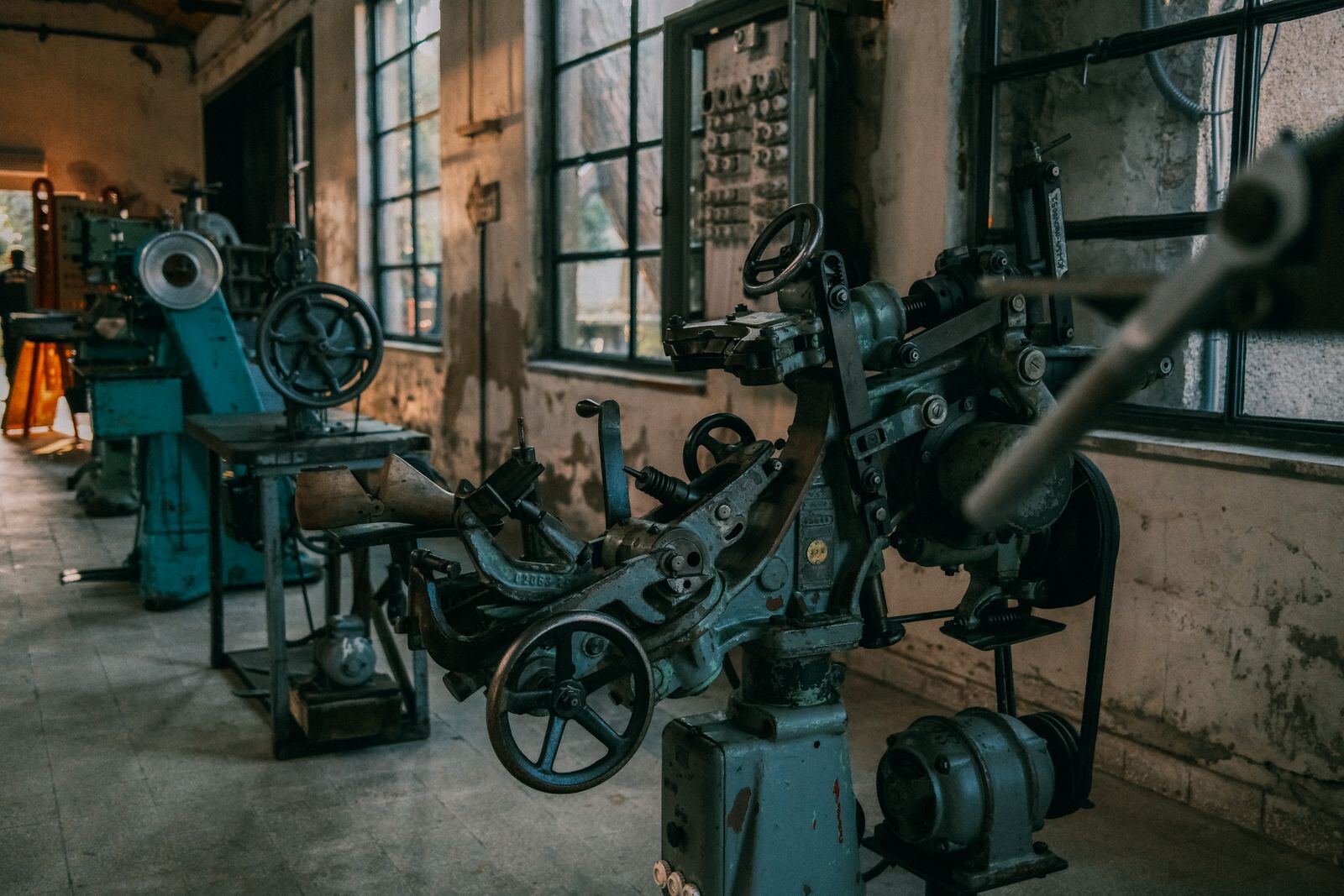
Floor space in the capital costs more than most of the kit standing on it. A packing machine that has been replaced, a rack of shelving from a mezzanine that came down, a press that has not run since the last big contract, a van that lost its route, all of them are paying rent at London rates every week they stay. That changes the arithmetic. In Park Royal or Brimsdown, surplus is not something to get round to. It is a cost.
We sell surplus for working businesses across the outer boroughs without interrupting the work. Items are catalogued where they stand and sold by online timed auction over a week or two, with a viewing day by appointment and collection booked into slots. Where a site has no yard and no room for viewers, the lots can be collected and sold from our own premises instead. Tell us what is idle and we will say what it is worth.
Food lines and print presses from the outer boroughs
Food production is the biggest single source. The producers in Park Royal turn over ovens, mixers, fryers, refrigeration and packing lines as products come and go, and other producers across the capital and the home counties are well placed to come and look before bidding closes. Stainless process kit travels well, so online bidding adds manufacturers from the rest of the UK.
Print is the second. Presses, guillotines, folders and finishing equipment from the printers around the A40 and the Purley Way go to a trade that has consolidated, so the field is narrower and the description has to be exact. We describe impressions, age, condition and history carefully and set reserves with you where a press has real value.
Vehicle workshops, engineering shops, recycling firms and the depots at Dagenham and Barking produce lifts, racking, forklifts and machine tools. Those are the most widely used of the three, so the field of possible buyers is broader.
Collection lorries and the low emission rules
Getting a lorry to a London unit is a planning job in a way it is not in Bradford or Middlesbrough. Any large vehicle coming in for collection has to comply with the Low Emission Zone and the Direct Vision Standard, and a buyer sending an older low loader from outside the city may find it cannot come in at all. We state that in the catalogue so nobody bids without knowing, and we can put buyers in touch with hauliers whose vehicles are compliant.
Then there is the site itself. Park Royal, the Brimsdown estates, the older units on the Purley Way and the sites in Charlton all differ, so vehicle access, turning space, shared loading bays and any restriction on the road outside are checked when we first visit. We walk the route, put what we find in the catalogue and book collection into slots that keep one lorry on site at a time. Our staff are there to release lots once their invoices are paid.
Anything small enough for a van, we collect ourselves.
What these sales can include
- Machine tools and CNC equipment
- Forklifts and access platforms
- Pallet racking and shelving
- Compressors and air tools
- Welders and fabrication kit
- Vehicles and trailers
- Test and measurement equipment
- Site accommodation and containers
- Packaging and labelling machines
- Obsolete stock and components
- Office furniture and IT
- Catering and canteen equipment
Selling from a live site
Most surplus sales happen inside a business that is still trading. That changes how we work. Cataloguing is done around your shifts. Viewing is by appointment or on a single day, with visitors signed in and escorted. Collection is booked in slots so that nobody is moving a machine through the middle of a production run.
Items that are still bolted down, plumbed in or connected to services are isolated by a competent person before collection, with electrical and gas disconnection done by qualified people. Buyers arrange and pay for the removal of their lots, and they do not disconnect services themselves.
Tell us about anything that affects access: weight limits on floors, door heights, crane availability, restricted hours. It all goes in the catalogue so buyers plan the removal properly.
The surplus equipment sales page covers what counts as surplus, one sale or a standing arrangement, pricing, reserves and the buyer's premium, after the sale.
Questions about selling in London
- Our unit in Park Royal has no yard and shares a loading bay. Can you still sell from it?
Yes, and it is one of the more common situations in London. Viewing is by appointment in small groups so nobody blocks the bay, and collection is booked into short slots, one buyer at a time, at hours the neighbours agree to. For a small quantity of kit the better answer is often to let us collect it in one visit and sell it from our own premises, which removes the viewing and collection problem entirely. We will tell you which we would choose.
- Do rates and rent make it worth selling sooner rather than holding out for a better price?
It is a calculation worth doing rather than a rule. Used equipment prices move, and so does the cost of keeping a machine on the floor at London rents, before insurance and the space it stops you using are counted. Waiting has a cost as well as a possible gain, and a reserve protects anything of real value if you decide to sell now. We give you our opinion on likely interest and on what the main items might make before you commit, and the market decides on the day.
More questions about surplus equipment
Related services
Guides
- Preparing machinery and equipment for sale
What to do before viewing day. Keep the machines that can be run safely available to demonstrate, isolate the rest, clean but do not repaint, find the tooling and manuals, and sort out access for removal.
- How used machinery is valued
Buyers pay for what a machine will do for them, less what it costs to get it out and running. This guide explains how make, hours, tooling, demand and removal cost feed a guide price, and why that price is not book value.